

Released in 2020, it wasn’t marketed as just another standard wide-angle zoom lens; but as a statement piece.
Introduction
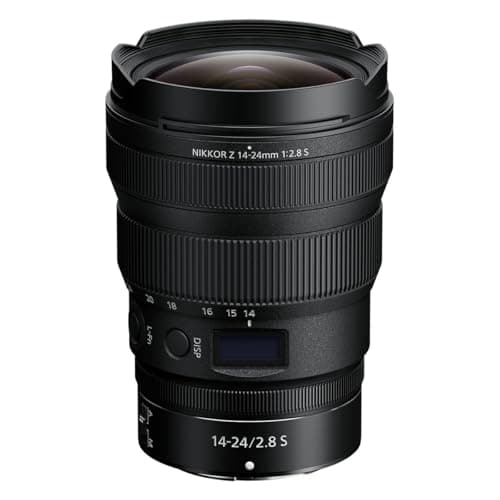
Looking at its sleek barrel, physical OLED information panel, and weighing in around 650-grams, it's clear that Nikon prioritized absolute optical perfection while engineering a modern, lightweight marvel.
But in a market already filled with incredible, portable wide zooms, including Nikon's own ultra-compact f/4 S, does this f/2.8 powerhouse justify its premium price tag and permanent spot in your camera bag?
Let’s find out.
Focal Length
The lens features a versatile wide-angle zoom focal length of 14 to 24mm.

Nikon Z 14-24mm f/2.8 S at 14mm
1/5This is universally regarded as the premier range for dramatic perspectives, architecture, and night skies, offering an expansive field of view.
It offers a grand, distortion-free representation of subjects when corrected, making it incredibly versatile across a variety of landscape and commercial photographic genres.
When mounted on full-frame (FX-format) cameras, the lens delivers a native 14-24mm focal length, and on APS-C (DX-format) crop-sensor camera bodies, the lens undergoes a 1.5x crop factor, shifting its effective focal length to a 21-36mm range with a more narrow angle of view.
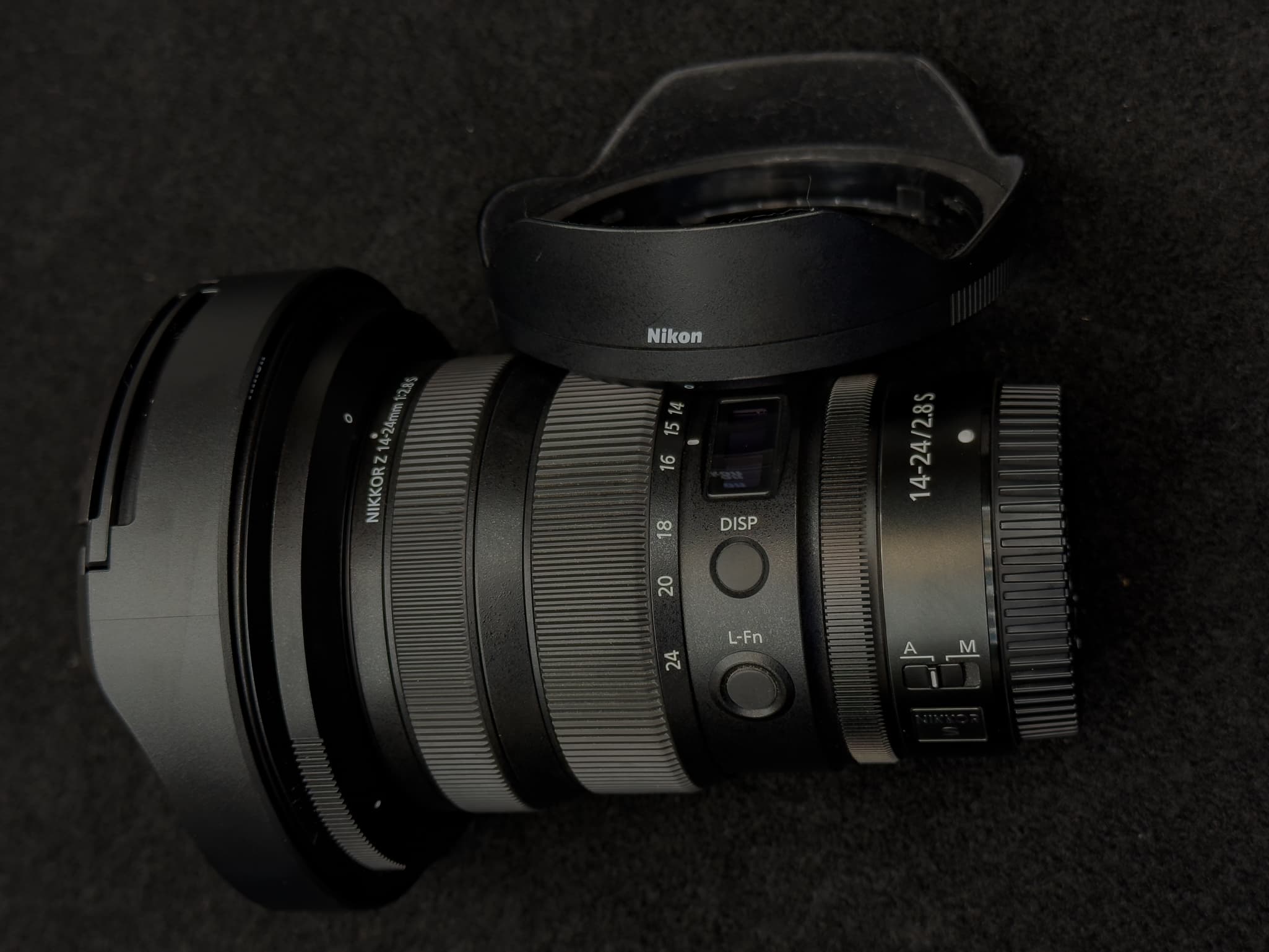
Profile image 1 of the Nikon Z 14-24mm f/2.8 S
1/6Aperture
At the core of this lens is its fast, constant maximum aperture of f/2.8.
This class-leading light gathering capability permits creative control over depth of field and excellent exposure consistency across the entire zoom range, enabling strong performance in low-light scenarios.
The lens offers an adjustable aperture range from a wide-open f/2.8 down to a minimum of f/22.
The range is electronically governed, allowing for smooth transition adjustments directly through the camera body or through the lens’s dedicated programmable control ring.
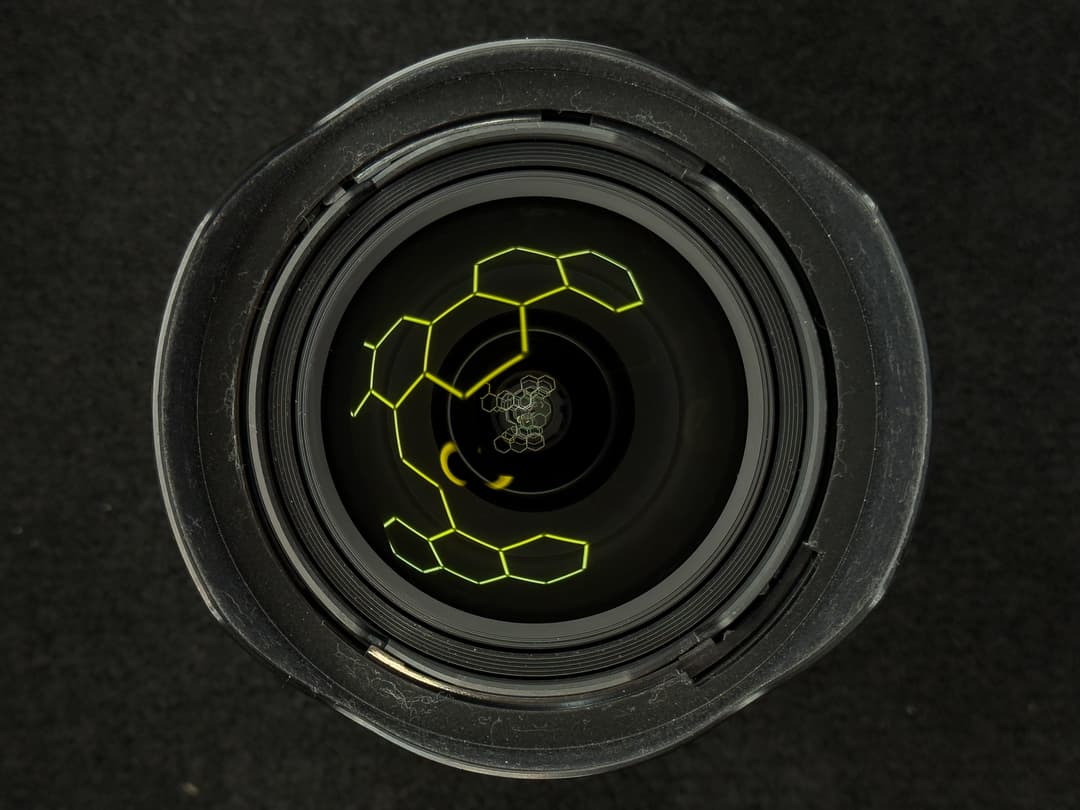
Containing 9 rounded aperture blades, the lens maintains a remarkably circular opening even when stopped down.
This design guarantees beautifully round, smooth out-of-focus highlights and eliminates harsh polygonal edges in the background.
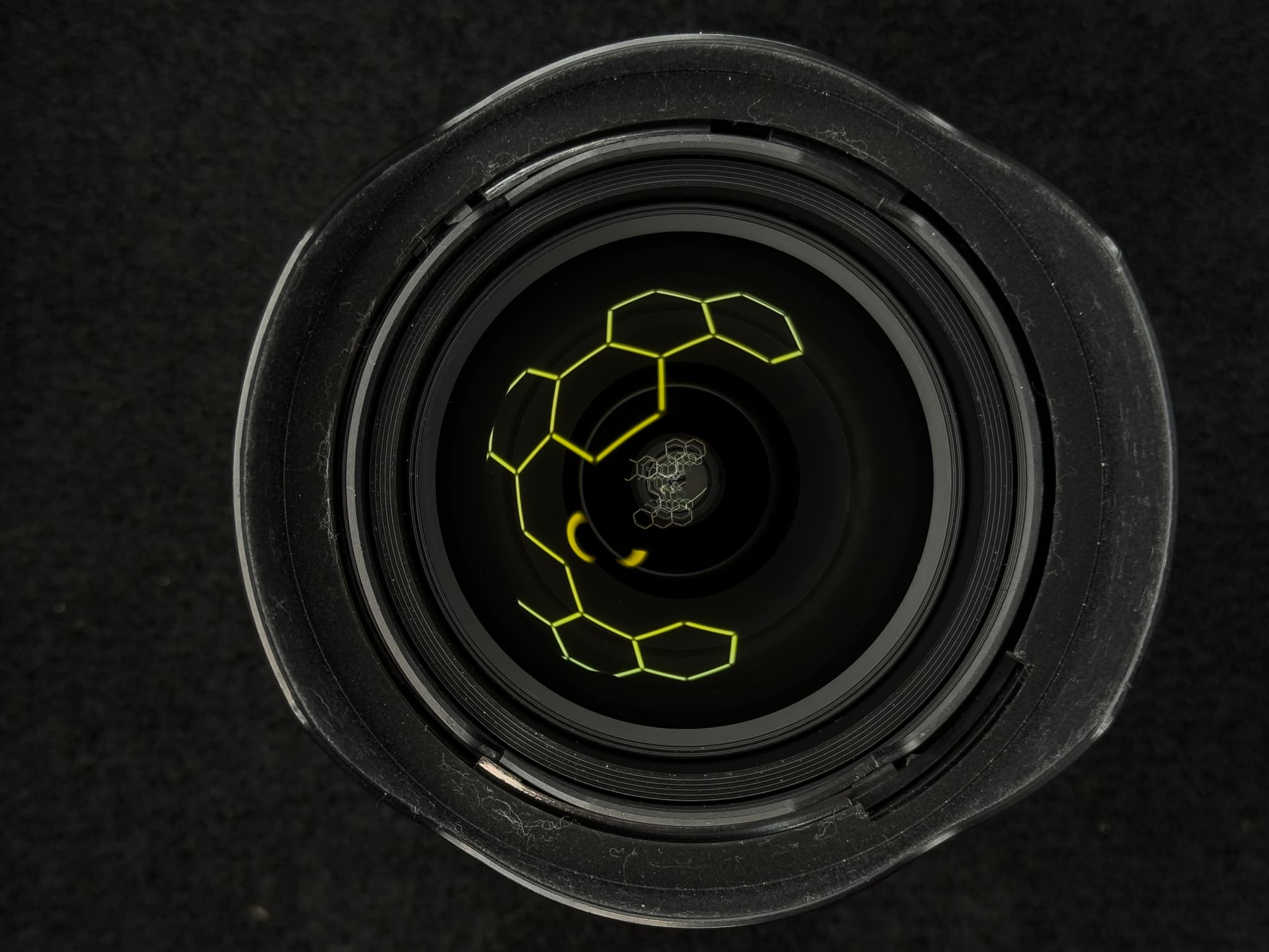
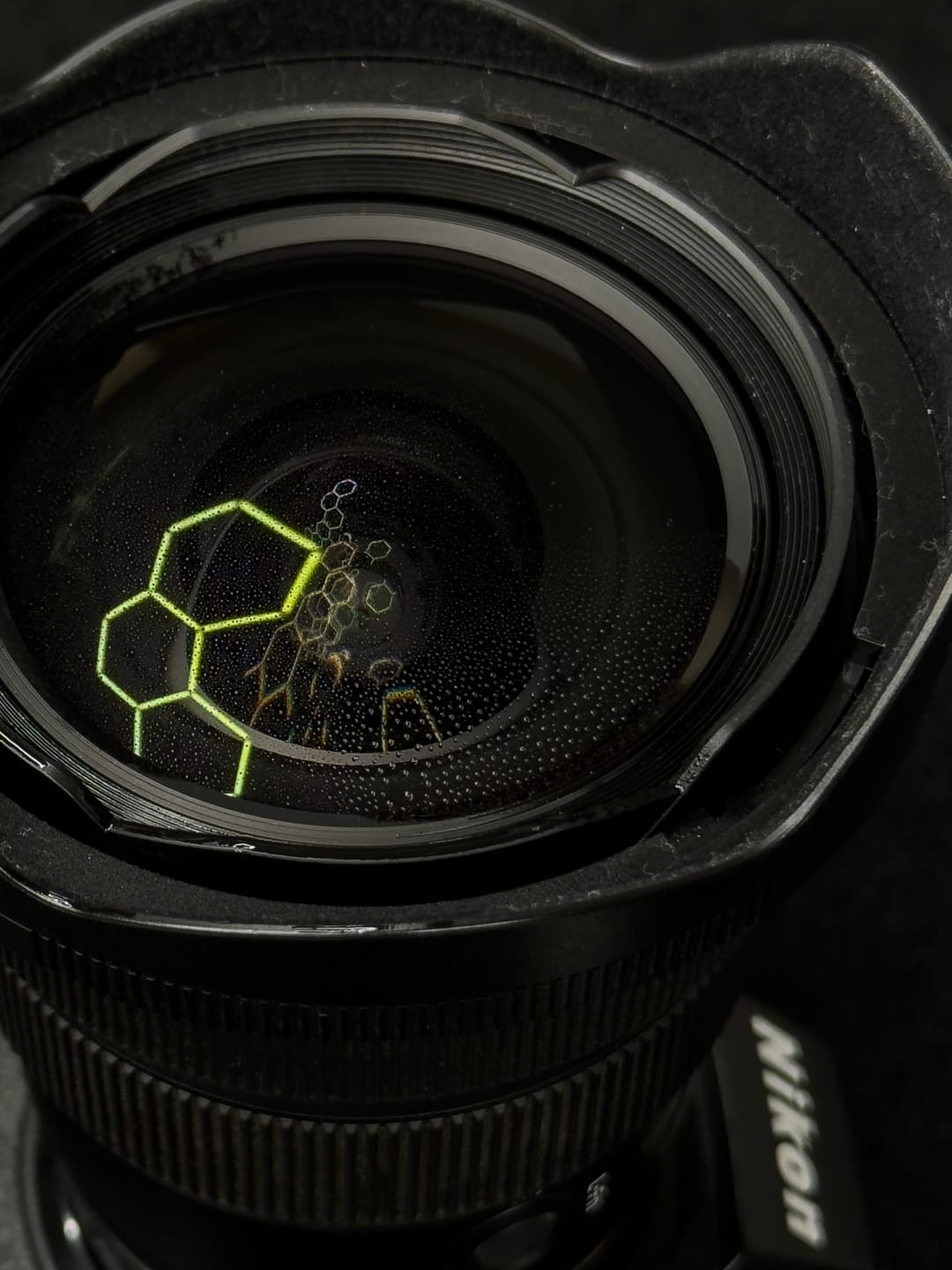
Head-on look into the front element of the Nikon Z 14-24mm f/2.8 S to display the constant f/2.8 physical glass opening and the 9 rounded diaphragm blades
1/3Focus Mechanism
Nikon implemented a highly advanced internal focus system in this lens.
Instead of moving massive, traditional front glass groups, the internal mechanism operates seamlessly, keeping the overall physical length of the lens completely constant during operation.
This lens utilizes a highly responsive stepping motor (STM) system.
The stepping motor operates with near-total silence. The mechanical whirring is completely minimized to being virtually inaudible to the human ear and microphones, making the lens a pristine choice for sound-sensitive environments.
Autofocus operation is exceptionally smooth, continuous, and precise. Given that wide-angle precision demands absolute accuracy across complex environments, the autofocus tracks pretty well.
Featuring a focus-by-wire system, manual focusing is handled electronically through a dedicated ring.
The camera settings allow you to customize the behavior of the ring, giving you the option to toggle between linear and non-linear focus throws depending on whether you require speed or deliberate, cinematic focus pulls.
The minimum focusing distance is 0.28 meters from the camera’s sensor plane. At this distance, it achieves a maximum magnification ratio of 0.13x, allowing for relatively close proximity to subjects for intimate details.
The dedicated manual focus ring is rubberized. Its rotation is fluid, allowing for an authentic, tactile mechanical feel without any noticeable latency or electronic lag.
Tight clip of the lens barrel profile of the Nikon Z 14-24mm f/2.8 S while the camera rapidly shifts autofocus points across different distances to show the dual STM stepping motor tracking agility
1/4Optical Design
As a flagship entry in Nikon's premium S-Line tier, the optical formulation represents the pinnacle of Z-mount design.
The complex optical architecture contains 16 elements arranged in 11 groups. This dense arrangement includes specialized glass specifically engineered to correct aberrations natively before any digital correction is applied.
The layout features 3 aspherical elements which effectively neutralize spherical aberration and field curvature.
Additionally, 4 Extra-low Dispersion (ED) glass elements are integrated into the recipe to suppress color fringing and maximize clarity.
Nikon applied its most sophisticated anti-reflective treatments to this lens: Nano Crystal Coat (N) and ARNEO Coat (A).
Together, these layers suppress incidental light hitting the glass from diagonal and vertical directions, drastically cutting down internal reflections, ghosting, and flare. It also features a Super Integrated Coating (SIC) for rich color balance and a fluorine coating on the front element to repel dirt and moisture.
Thanks to the tandem operation of the ED glass and the S-line optical standard, chromatic aberrations are heavily suppressed.
Fringing around high-contrast transitions wide open at f/2.8 is kept remarkably minimal and is virtually non-existent by f/4.
Geometric distortion is kept well under control. The lens exhibits predictable barrel distortion at 14mm and minor pincushion distortion at 24mm that is automatically corrected flawlessly via embedded in-camera profiles, ensuring straight architectural lines remain perfectly flat.
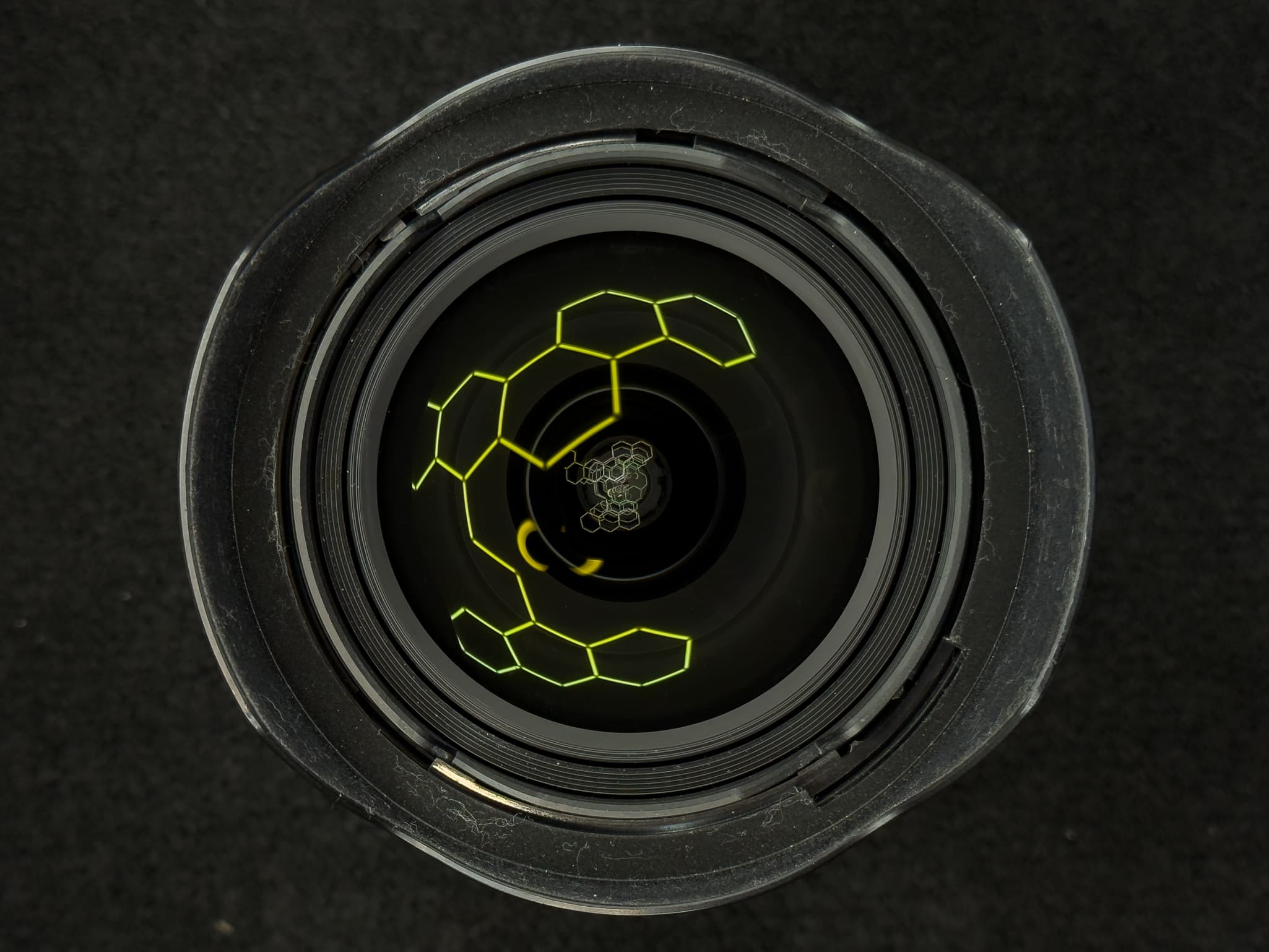
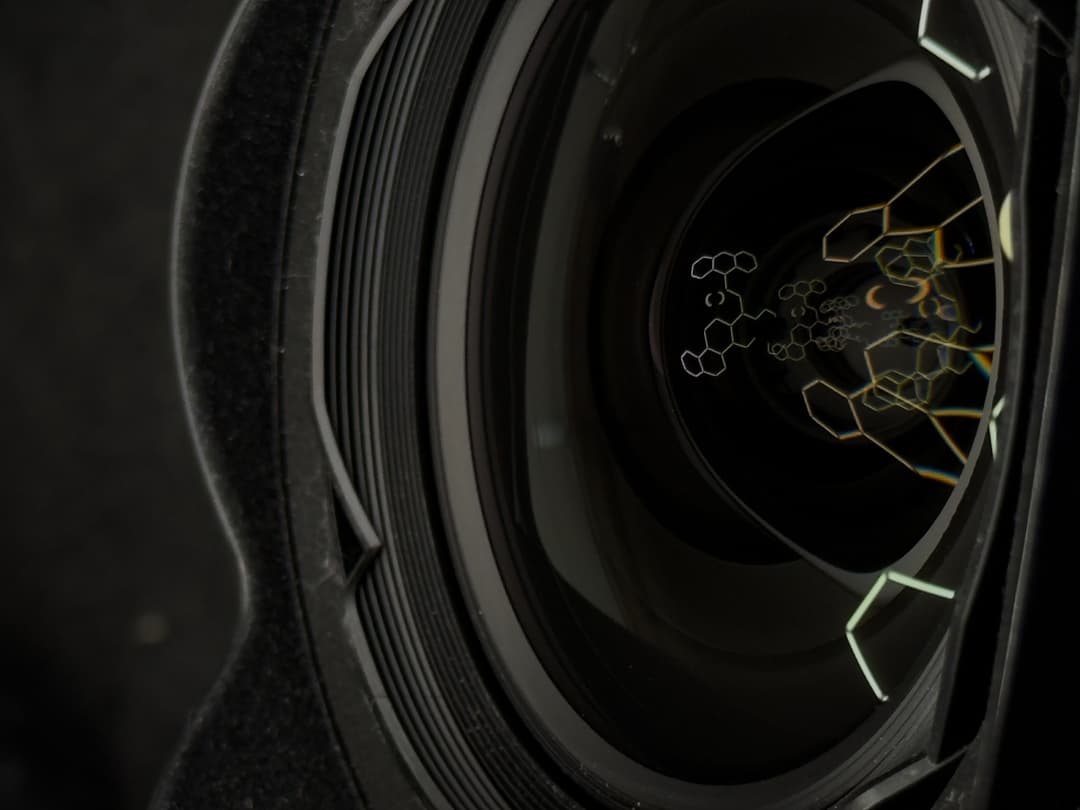
Tight accent shot of the specialized bulbous front glass element catching a straight grid light to highlight the precise double-sided aspherical lens molding on the Nikon Z 14-24mm f/2.8 S
1/6Construction Materials
Constructed to meet rigorous professional standards, the outer shell combines premium engineered polycarbonate materials with a rugged magnesium alloy internal skeleton. This provides an optimal blend of durability and structural stability.
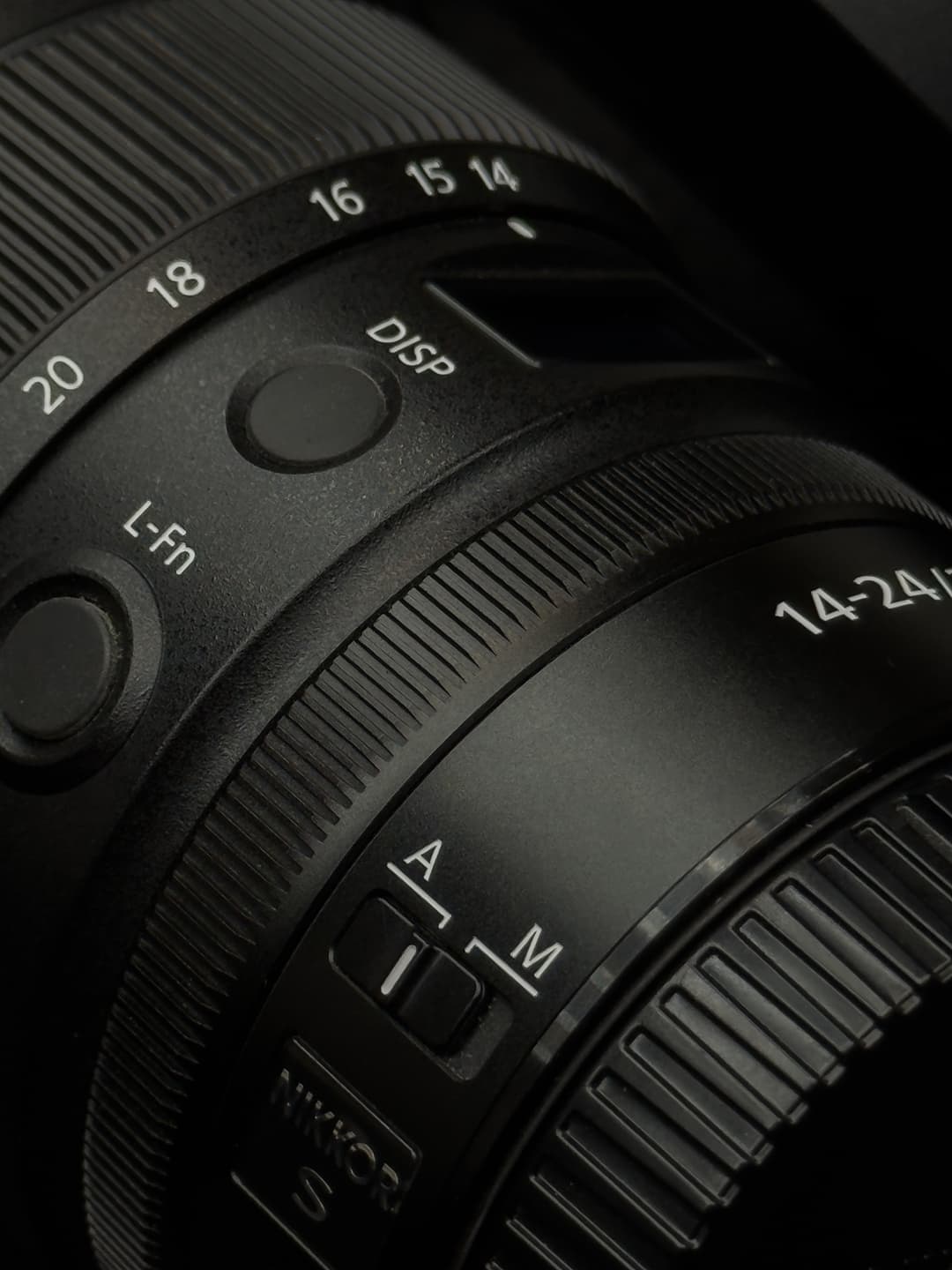
The lens barrel sports a sleek, matte-satin black finish. It features an integrated OLED information display panel that can cycle through displaying current aperture, exact focus distance, or depth-of-field scales.
It also houses an assignable Lens Function (L-Fn) button, an auto/manual toggle switch, and a secondary customizable control ring.
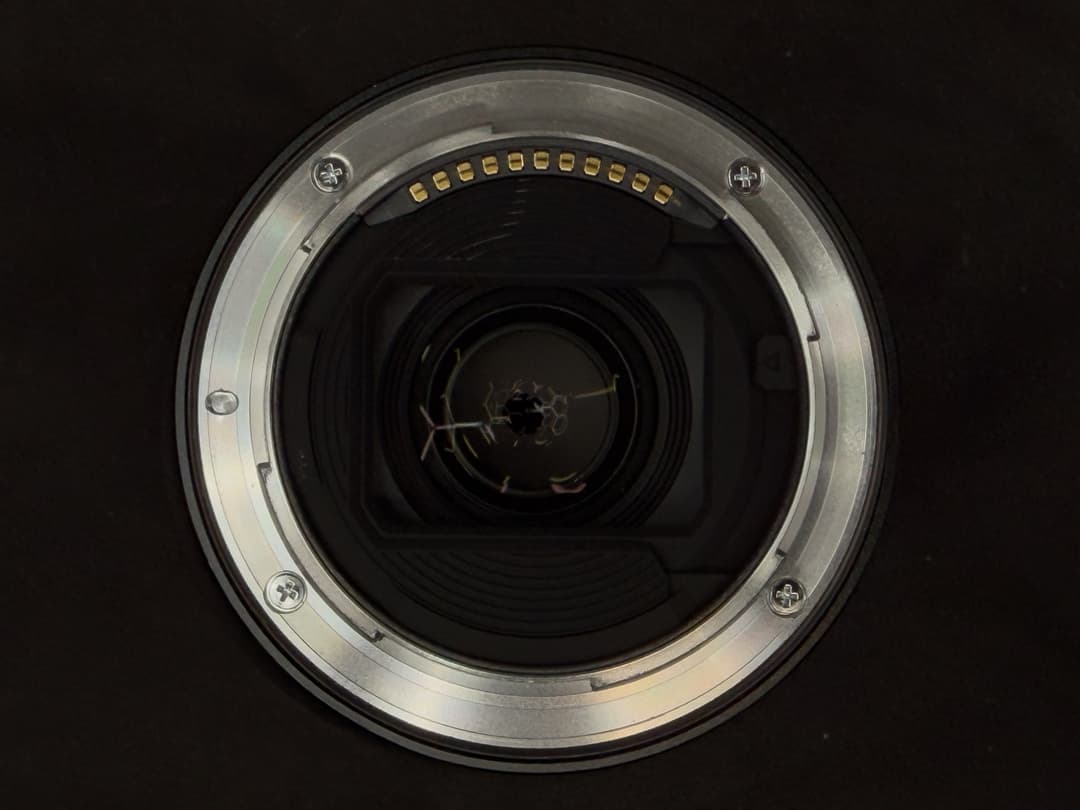
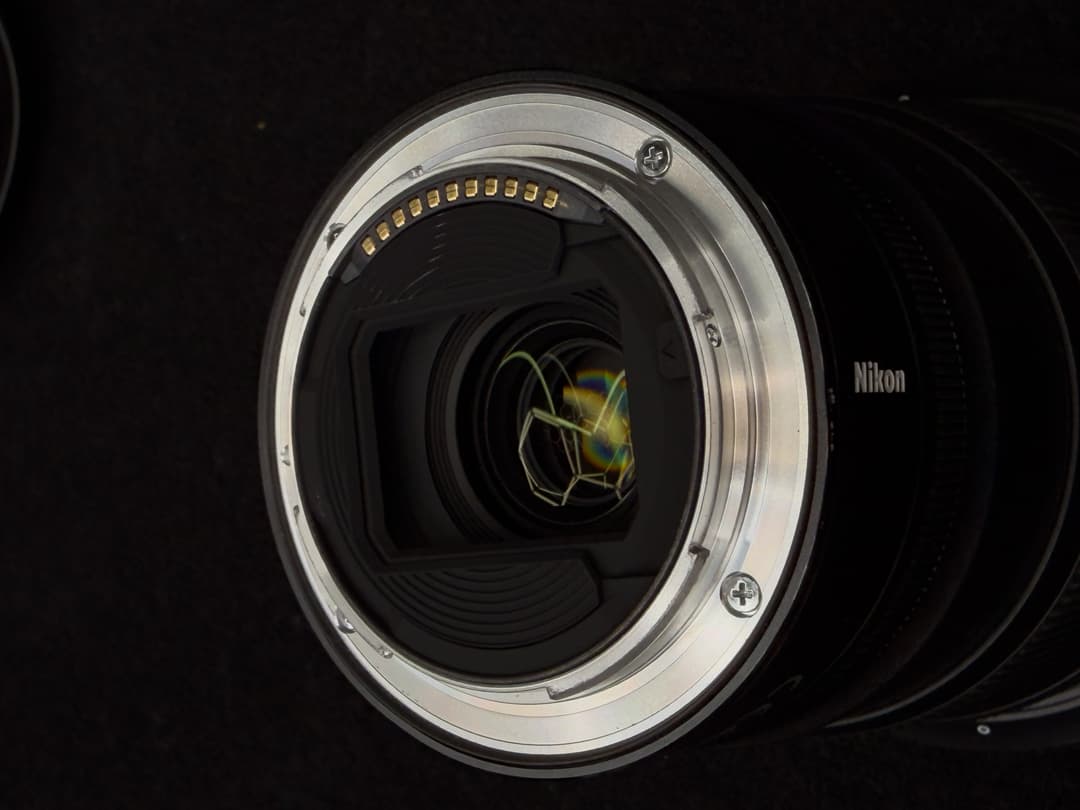
The lens is fitted with a heavy-duty, solid metal Nikon Z bayonet mount. It includes 11 gold-plated electronic contacts for ultra-high-speed communication with the camera body and 4 locking tabs for secure, wiggle-free mounting.
Positioned towards the front half of the lens barrel, the primary manual focus ring is rubberized and easily distinguishable by touch alone from the thinner control ring, allowing the photographer to maintain eye contact with the viewfinder.
The front of the lens features a unique hood-based filtering solution. While the native front element is bulbous, pairing the lens with the included HB-97 lens hood provides a massive 112mm filter thread that does not rotate, allowing for the seamless use of screw-in circular polarizers and ND filters, alongside a rear slot for gelatin filters.
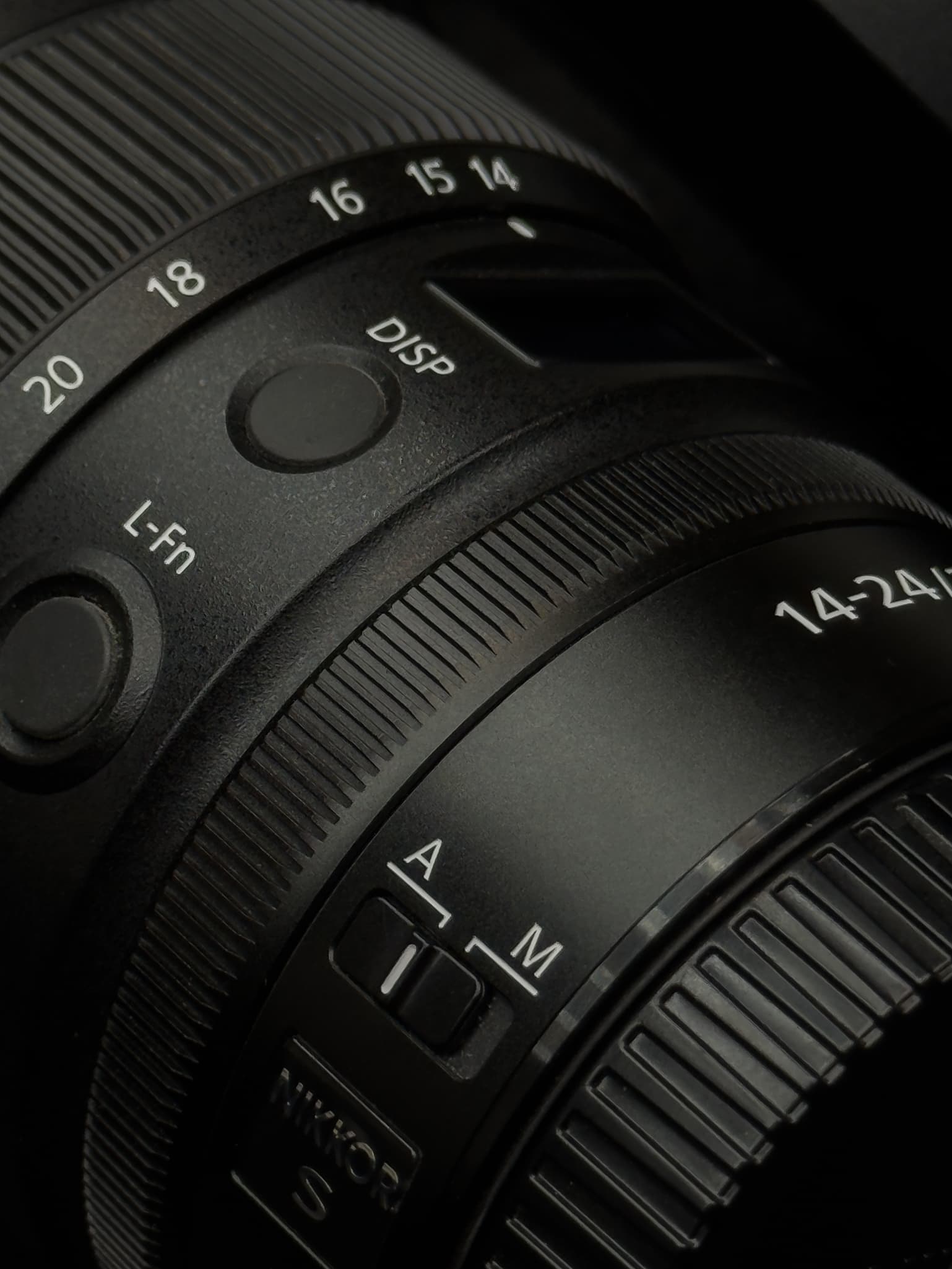
Shot highlighting the physical material of the Nikon Z 14-24mm f/2.8 S split between the cold metal lens mount base and the premium matte engineered polymers used to keep the chassis lightweight
1/7Weather-Sealing
True to its professional pedigree, the lens features extensive weather-sealing.
Rubber gaskets are deployed around all moving sections of the barrel, buttons, switches, the OLED panel, and the rear mount to actively prevent dust and moisture penetration.
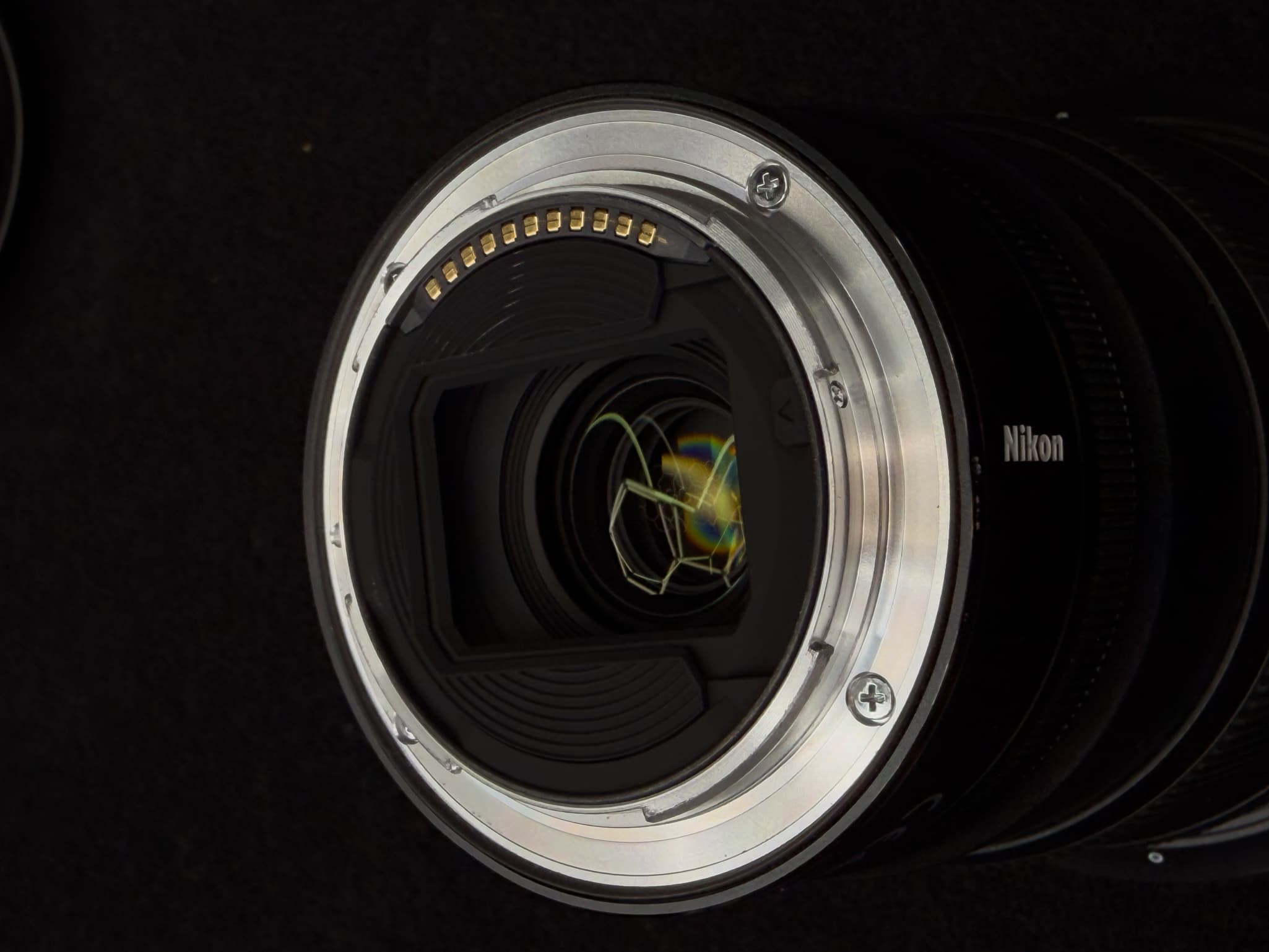
Close-up focusing directly on the thin black rubber weather-sealing gasket lining the outer rim of the rear metal mount on the Nikon Z 14-24mm f/2.8 S
1/3Weight
Weighing in at around 650 grams (1.43 lbs), it is an incredibly compact and lightweight ultra-wide zoom. Its mass is highly manageable compared to its heavy DSLR predecessor, balancing perfectly on professional bodies like the Nikon Z8 and Z9 or travel-friendly mirrorless cameras.
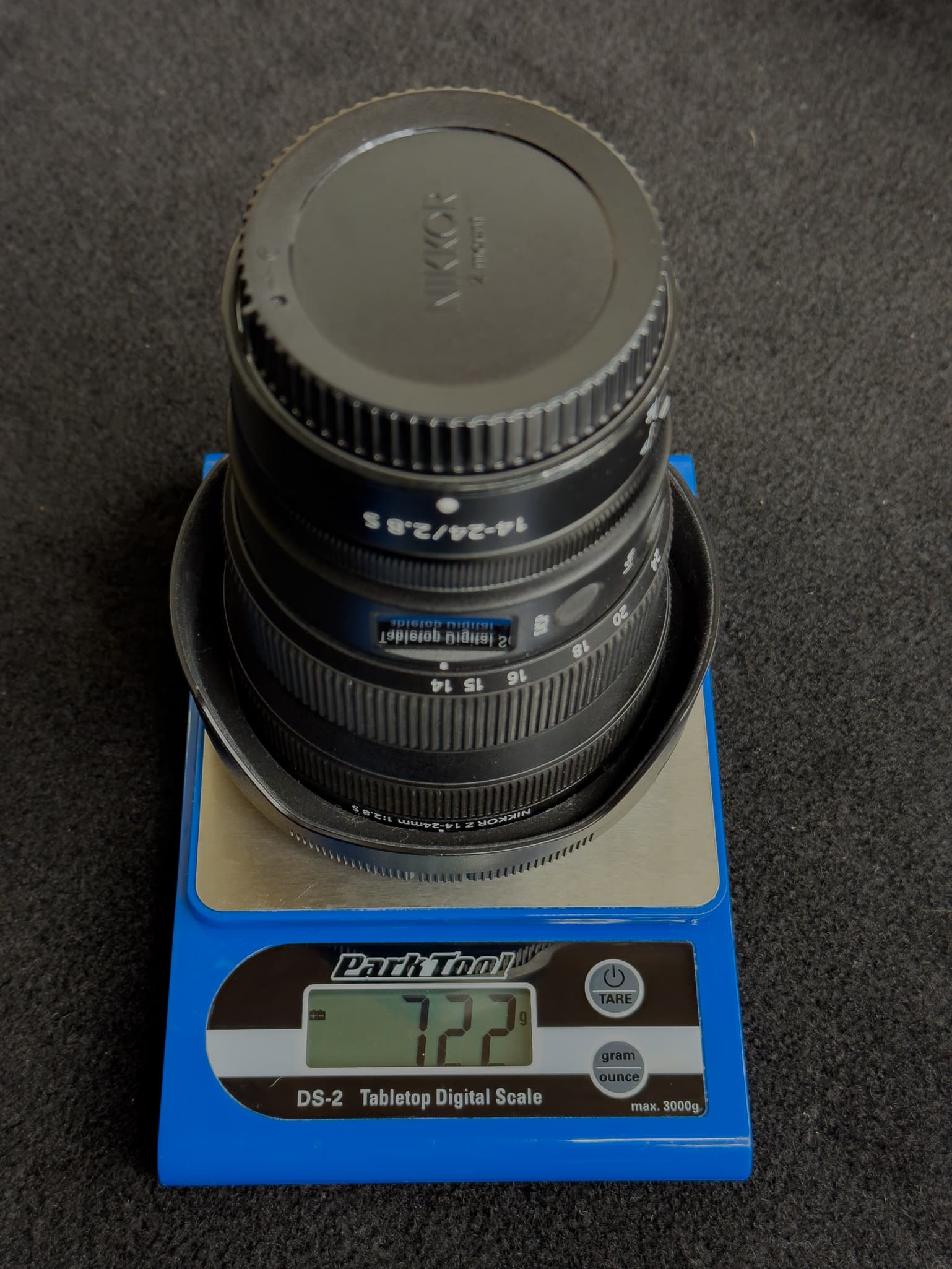
Weight of the Nikon Z 14-24mm f/2.8 S (with lens hood)
Image Stabilization
The lens does not contain built-in optical stabilization (Vibration Reduction). Instead, it relies on the robust 5-axis In-Body Image Stabilization (IBIS) built natively into Nikon’s full-frame mirrorless camera bodies to counteract camera shake.
Here’s a clip captured without a gimbal or tripod to show how stable the lens remains relying purely on a camera body's IBIS.
Stabilization test of the Nikon Z 14-24mm f/2.8 S
Image Quality
For architectural photography, this lens is an absolute masterpiece for architecture and interiors. Shooting wide open at f/2.8 delivers sweeping angles that preserve tack-sharpness from the center out to the edges, while effortlessly handling cramped indoor spaces. Lines remain beautifully straight and true, and the transition of light through wide rooms is handled gracefully.

Architectural photography with Nikon Z 14-24mm f/2.8 S
1/8For street photography, With its lightweight footprint making it highly discreet and agile compared to older trinity lenses, the 14-24mm focal length offers a dramatic, expansive perspective for urban environments. It yields exceptional micro-contrast and subject separation, allowing photographers to capture grand street backgrounds and environment-focused candid shots with incredible clarity.
For low light photography, with its bright constant f/2.8 aperture, this lens is a low-light powerhouse. It gathers an immense volume of light, allowing users to shoot at lower ISO values or maintain faster shutter speeds in dim cathedrals, event venues, or twilight cityscapes, making it a reliable tool for professional documentary and event photographers.
For astrophotography, for night sky applications, the lens resolves pinpoint stars with absolute crispness. While many ultra-wide lenses suffer from heavy coma in the corners, the specialized S-Line elements keep coma entirely minimal at f/2.8, revealing stunning corner-to-corner clarity and zero color bleeding on a starry night.
For landscape photography, perfect for long hikes thanks to its drastically reduced weight, the lens excels at infinity focus distances. Review benchmarks demonstrate that when stopped down, it is capable of resolving extreme fine detail that fully saturates high-resolution sensors, delivering ultra-sharp landscape frames with uniform illumination and high contrast across the entire frame.
For macro photography, though not a dedicated macro lens due to its 0.13x magnification ratio, its close-focus capability of 0.28m lets you get tight on foreground elements. Shooting close-up details at f/2.8 yields dynamic perspectives defined by an incredibly wide field of view surrounding an intimate subject, backed by clean, smooth out-of-focus elements.
F-Stop Ranges
The optical character evolves beautifully across its f-stop range:
At f/2.8, offers excellent center sharpness and remarkably high contrast with very good rendering in the corners. Vignetting is present at the 14mm end but modest and easily managed for an ultra-wide zoom class.
At f/4, center sharpness turns exceptionally biting, and the mid-frame/corners clean up rapidly. Coma and peripheral vignetting drop down significantly, ensuring crisp details start spreading fully across the frame.
At f/5.6, the lens reaches its absolute peak resolution across the entire frame. Edge-to-edge sharpness is jaw-dropping, where it exhibits breathtaking clarity that competes directly with reference-grade prime glass.
At f/11, frame illumination becomes perfectly uniform; contrast and resolving power remain at excellent levels, making it ideal for high-detail deep-focus studio, architectural, and landscape photography.
At f/22, image quality remains highly usable, though subtle softening gradually creeps into the frame due to the natural physical limits of optical diffraction.

Nikon Z 14-24mm f/2.8 at f/2.8
1/5Video Quality
The engineering behind this lens heavily favors professional video production.
The inclusion of the modern internal focus system results in minimal to virtually non-existent focus breathing, meaning the composition does not shift noticeably when racking focus between foreground and background subjects.
Focus tracking via the smooth STM motor is entirely silent, keeping unwanted handling noises out of the audio track.
Furthermore, the clickless control ring allows videographers to make completely silent and seamless aperture adjustments or exposure compensations on the fly.
Conclusion
In conclusion, Nikon set out to prove what the Z mount could achieve in the ultra-wide space, and the 14-24mm f/2.8 S is a triumphant proof of concept.
From a pure performance standpoint, its resolution metrics, control over chromatic aberrations, and innovative lightweight design justify its flagship S-Line designation.
While its price tag removes it from the realm of casual hobbyist gear, it stands as a highly justifiable investment for working professionals who require maximum wide-angle performance at f/2.8.
It earns my highest recommendation for professional landscape, architectural work, and night-sky astrophotography.
The bottom line?
Buy it if: You demand absolute edge-to-edge sharpness at f/2.8, require an ultra-wide perspective for landscapes or astrophotography without the weight of a traditional DSLR setup, and want a professional-tier wide zoom that natively accommodates front filters.
Skip it if: You don't require a fast f/2.8 aperture, shoot mostly at f/5.6 or smaller apertures on a tripod, or are perfectly satisfied with the even lighter, highly capable, and much more affordable Z 14-30mm f/4 S.
Description
The Nikon Nikkor Z 14-24mm F2.8 S is a professional-grade wide-angle zoom lens designed for Nikon Z-series mirrorless cameras, offering exceptional sharpness, contrast, and low-light performance. With a constant f/2.8 aperture, this lens ensures bright, consistent results across the entire zoom range, making it perfect for landscape, architecture, astrophotography, and wide-angle event photography. The 14-24mm focal length provides an ultra-wide perspective, allowing photographers to capture expansive vistas and intricate details with minimal distortion, thanks to its advanced optical design. The lens features extra-low dispersion (ED) and aspherical (AS) elements, which reduce chromatic aberration and deliver high-resolution images with vivid color accuracy. Its weather-sealed, durable construction makes it ideal for outdoor shooting in challenging conditions, while the fast, precise autofocus ensures sharp focus even in dynamic environments. Whether you're shooting vast landscapes or creative wide-angle portraits, the Nikon Nikkor Z 14-24mm F2.8 S offers outstanding optical performance, making it a must-have tool for professional photographers and serious enthusiasts looking to capture breathtaking wide-angle shots.
Sample Photos
Sample photos will be added soon!
Basics
| Name | Nikon Z 14-24mm F2.8 S |
|---|---|
| Release Date | September 2020 |
| Brand | Nikon |
| Type |
|
| Focal Length | 14-24mm |
| Prime or Zoom | Zoom |
| Max Format Size | 35mm FF |
| Diaphragm Blades | 9 |
| Lens Elements | 16 |
| Lens Groups | 11 |
| Filter Thread | 112mm |
| Lens Hood Supplied | Yes |
| Tripod Collar | No |
| Lens Coating | 4 ED elements, Arneo + Nano Crystal coatings |
| Weather-Sealing | Yes |
| Color | Black |
| Lens Mount |
|
Autofocus
| Autofocus | Yes |
|---|---|
| Motor Type | Stepper motor |
| Focus Method | Internal |
| Minimum Focus | 0.28 m (11.02″) |
| Max Magnification | 0.13× |
Aperture
| Maximum Aperture | f2.8 |
|---|---|
| Minimum Aperture | f22 |
| Aperture Ring |
Features
| Features |
|
|---|
Dimensions & Weight
| Weight | 650 g (1.43 lb) |
|---|---|
| Diameter | 89 mm (3.5″) |
| Length | 125 mm (4.92″) |
Use Case
| Use Cases |
|
|---|
Experience Level
| Experience Level | Amateur, Professional |
|---|
* Product prices and availability are accurate as of the date/time indicated and are subject to change. Any price and availability information displayed on Amazon.com at the time of purchase will apply to the purchase of this product. Imaginated.com may receive compensation for purchases made at participating retailers linked on this site. This compensation does not affect what products or prices are displayed, or the order of prices listed. Learn more here.