

The Nikon Z 40mm f/2 represents a pivotal entry in Nikon’s mirrorless camera lineup.
Introduction
Released as an ultra-compact, lightweight 'everyday' prime lens, it occupies a unique space between traditional wide-angle (35mm) and standard (50mm) lenses.
Designed for both full-frame (FX) and APS-C (DX) Z-mount camera bodies, this lens offers an accessible price point without sacrificing the modern optical capabilities expected from the Z-mount platform.
Focal Length
The 40mm focal length on a full-frame (FX) sensor yields an angular diagonal field of view of 57 degrees.
This focal distance sits in the 'natural perspective' threshold, often considered closer to human visual field perception than a standard 50mm, which can feel slightly tight in confined spaces, or a 35mm, which can introduce perspective distortion near the frame edges.
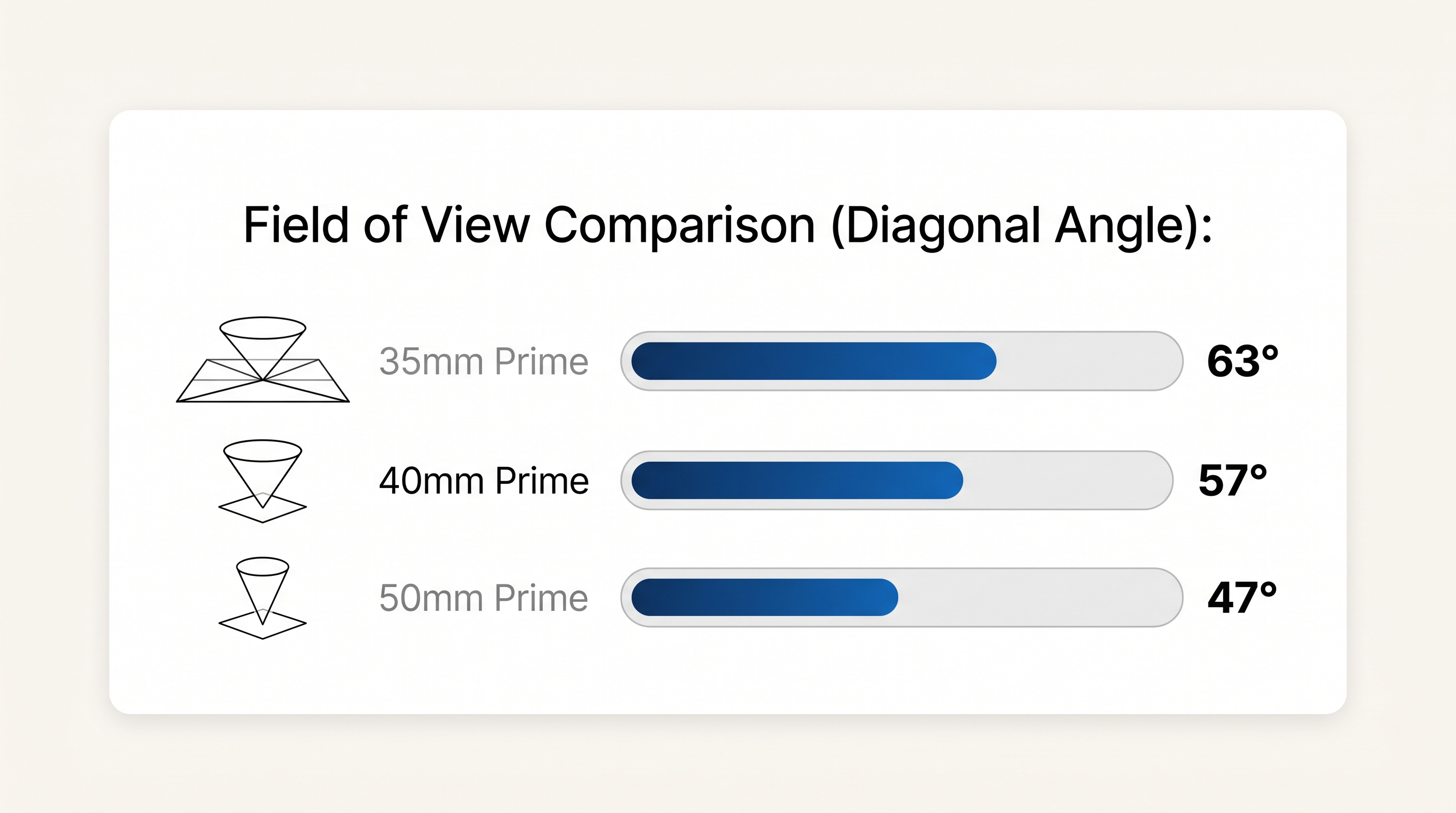
When mounted on a Nikon DX-format body (or used in FX crop mode), such as the Nikon Z50, Nikon Z30, or Nikon Z fc, the 1.5x crop factor transforms the lens into a 60mm equivalent field of view.
At 60mm equivalent, the angle of view narrows to approximately 38.8 degrees. This shift alters the core utility of the lens:
- FX Format (40mm): Exceptional for environmental portraiture, street snap-shooting, architecture-in-context, everyday carry (EDC), and casual photography.
- DX Format (60mm equivalent): Functions as a short portrait and headshot prime with flattering compression, as well as a tight documentary lens suited for isolating subject details from background clutter.
The 40mm field of view allows photographers to maintain a close working distance without introducing unnatural facial foreshortening, making it an adaptable single-prime solution for travel where carrying multiple specialized lenses is impractical.
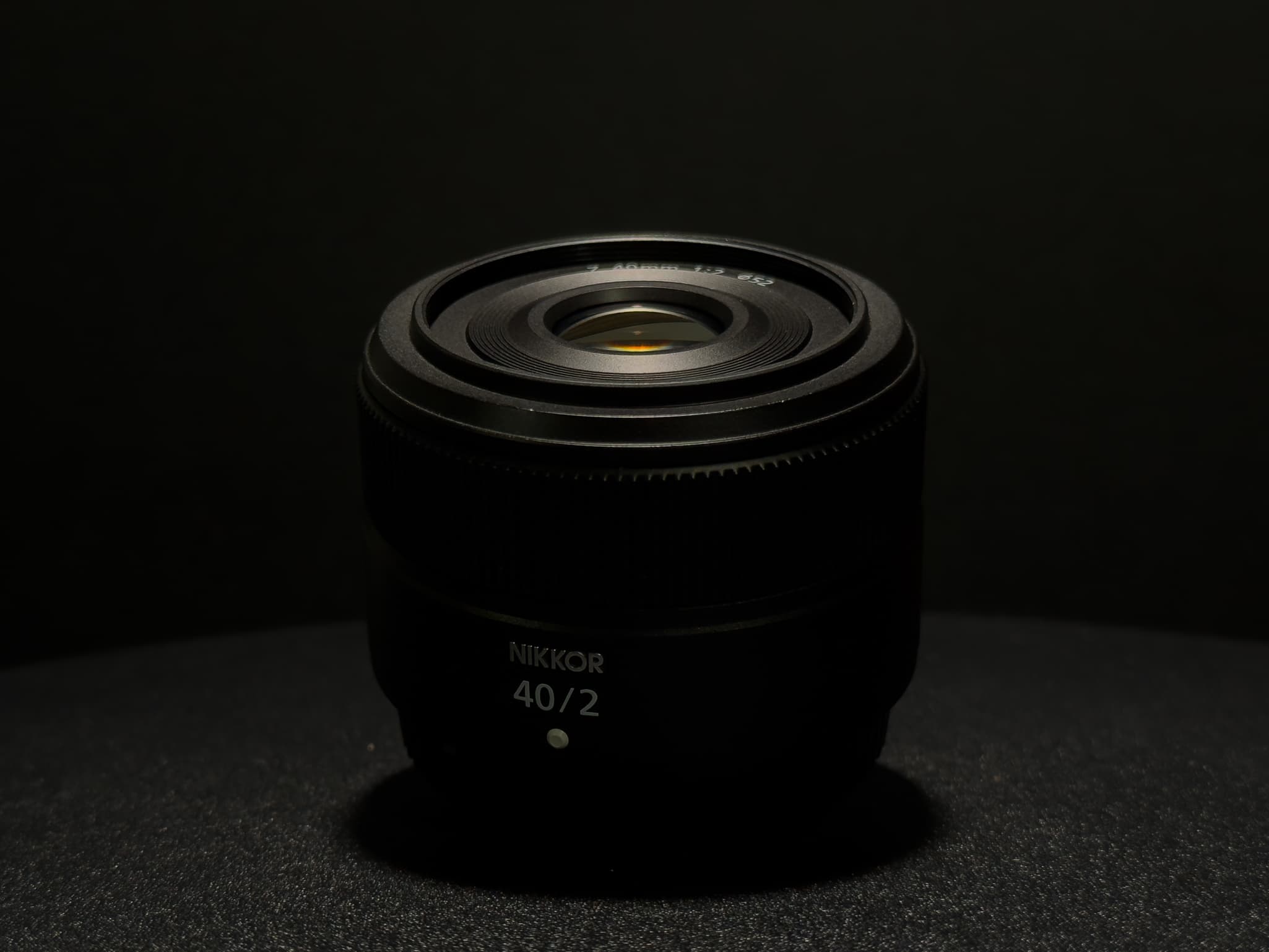
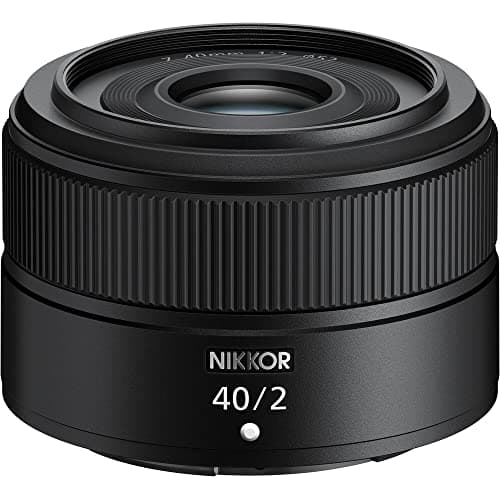
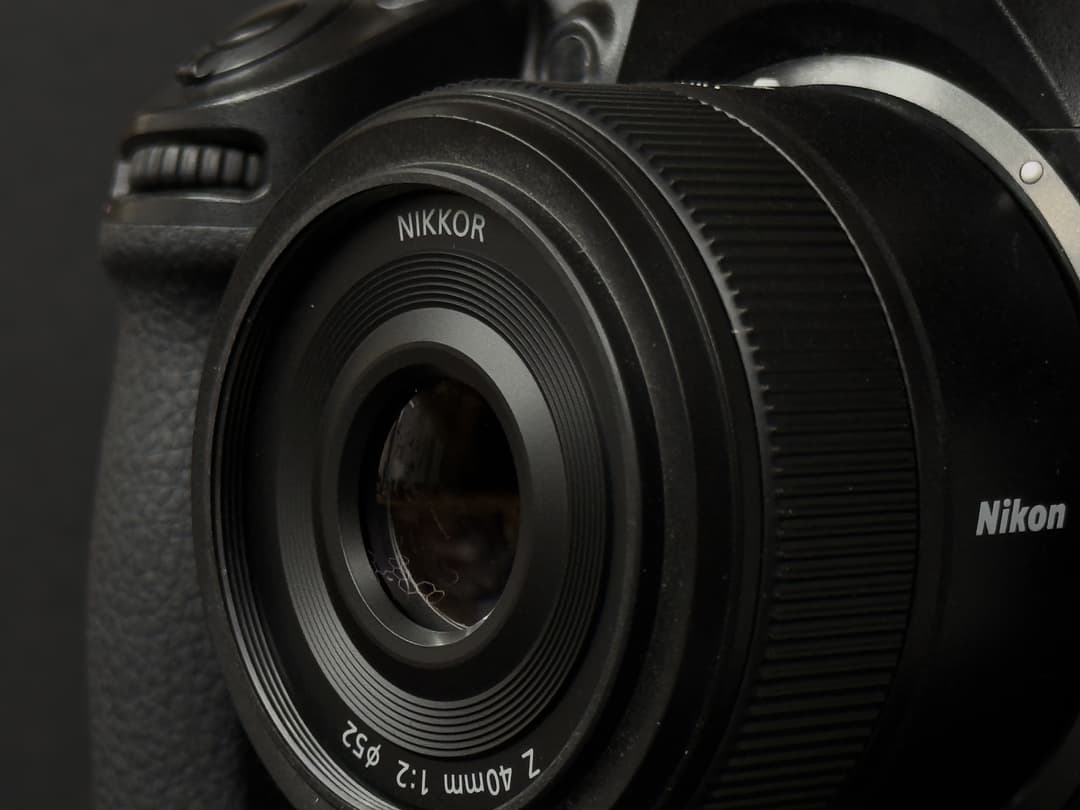
Profile shot of the Nikon Z 40mm f/2
1/2Aperture
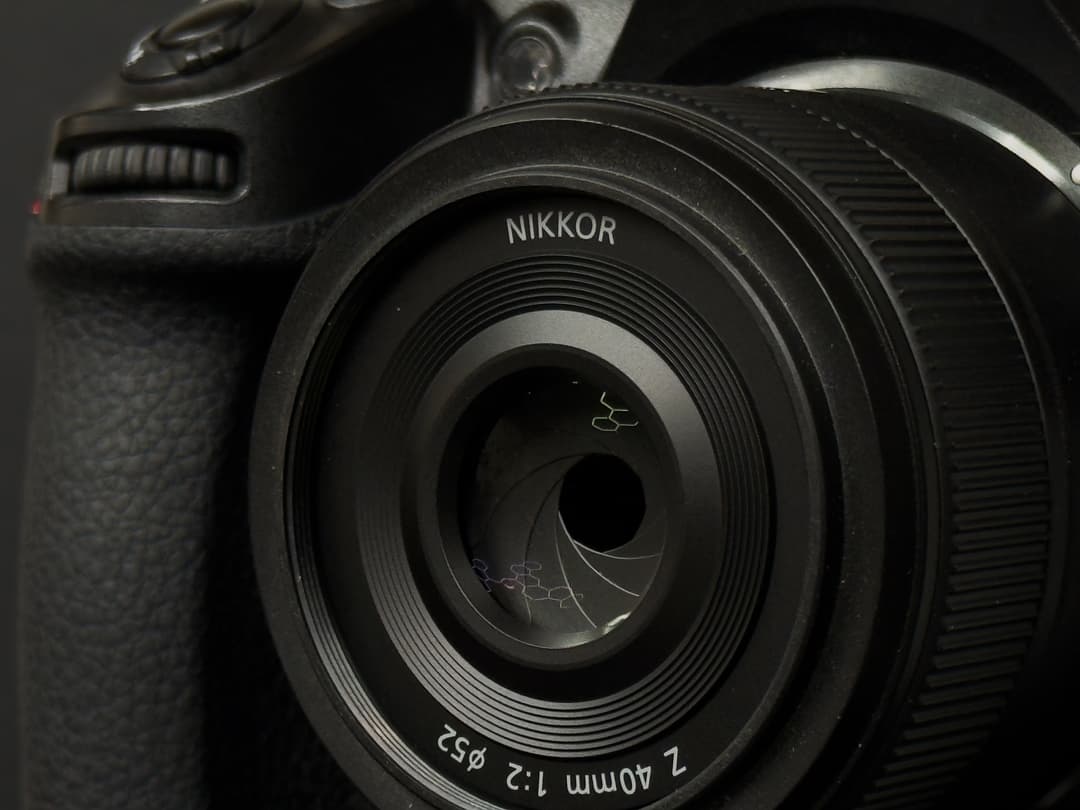
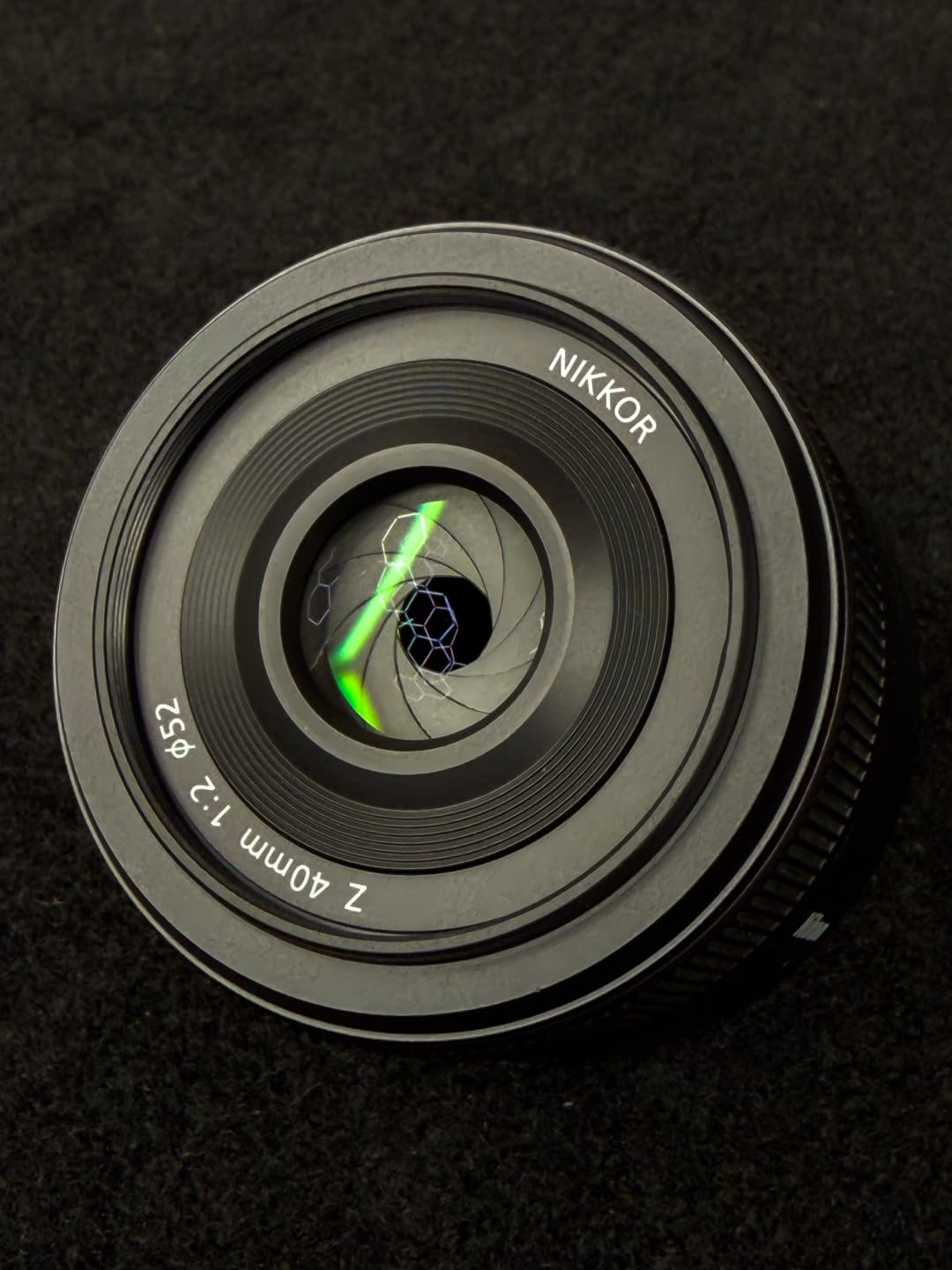
The optical path features a fast maximum aperture of f/2, stopping down to f/16 via an electronically controlled diaphragm system.
The brightness of the f/2 aperture provides two primary benefits: high-speed shutter preservation in low ambient lighting conditions, and isolation of subjects through shallow depth-of-field creation.
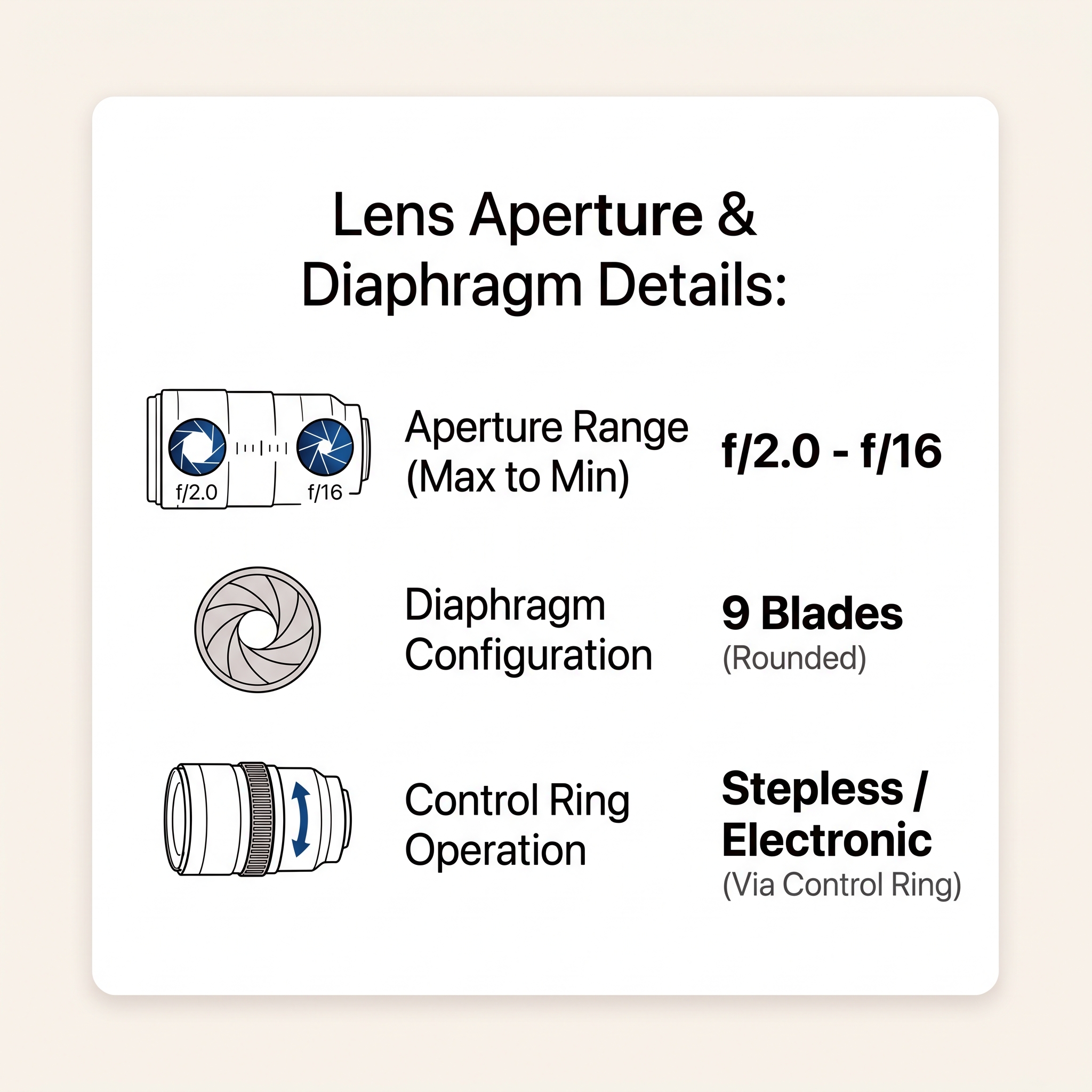
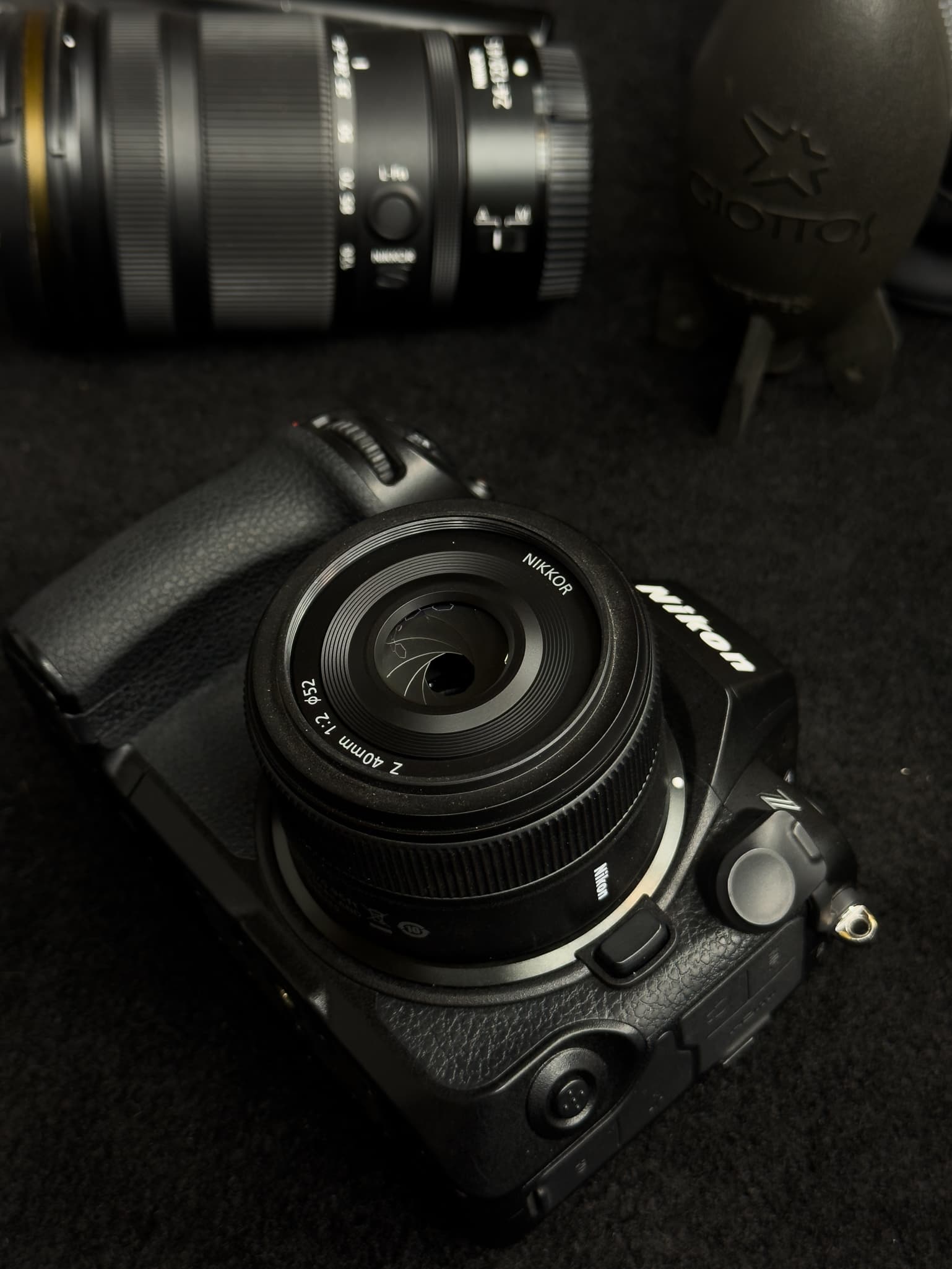
The diaphragm employs 9 rounded blades, which maintain a circular aperture geometry down to approximately f/4.
When shooting wide open at f/2, out-of-focus background highlights (bokeh) display clean rendered centers free from prominent onion-ring structures (due to the specific manufacturing process of its aspherical glass elements).
- Optical Vignetting (Cat-Eye Effect): Near the edges and corners at f/2, bokeh circles deform into pronounced 'cat-eye' oval shapes due to physical vignetting from the mechanical barrel.
- Background Isolation: Transition from focal plane sharpness to out-of-focus blur is smooth and gradual. While the blur mass is not as soft as an f/1.2 or f/1.4 optic, the rendering provides strong dimensional subject isolation at typical working distances (1 to 3 meters).
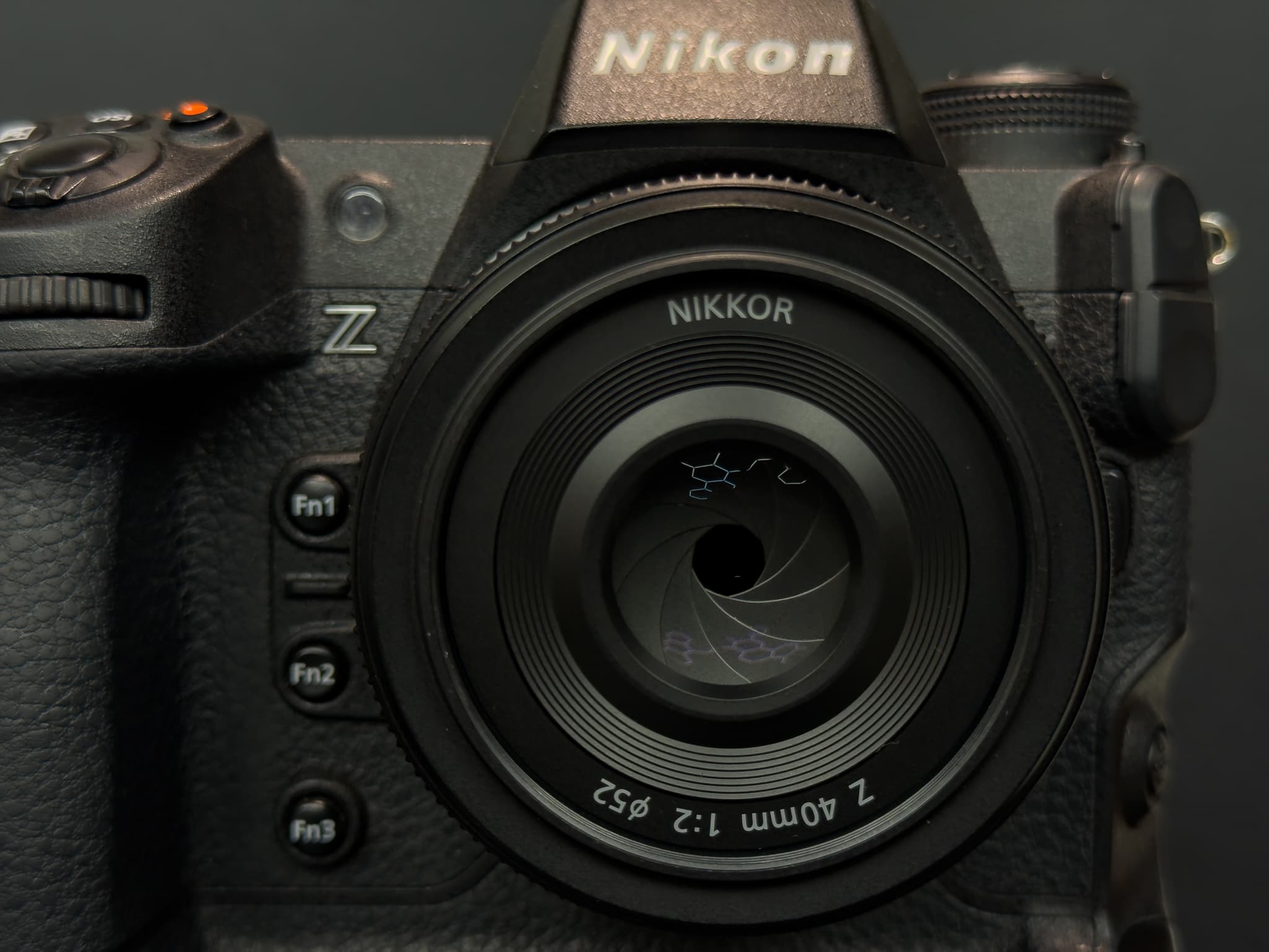
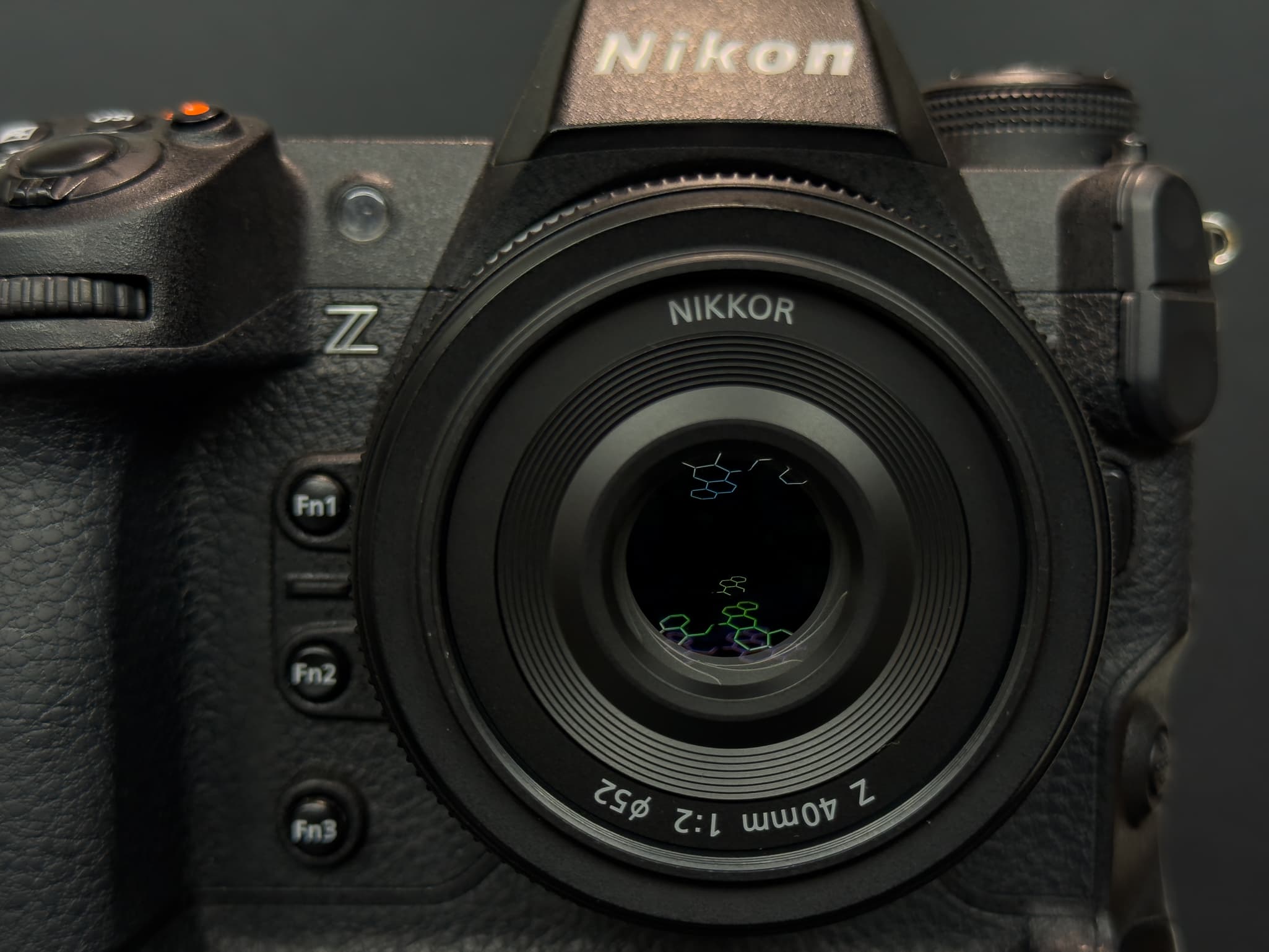
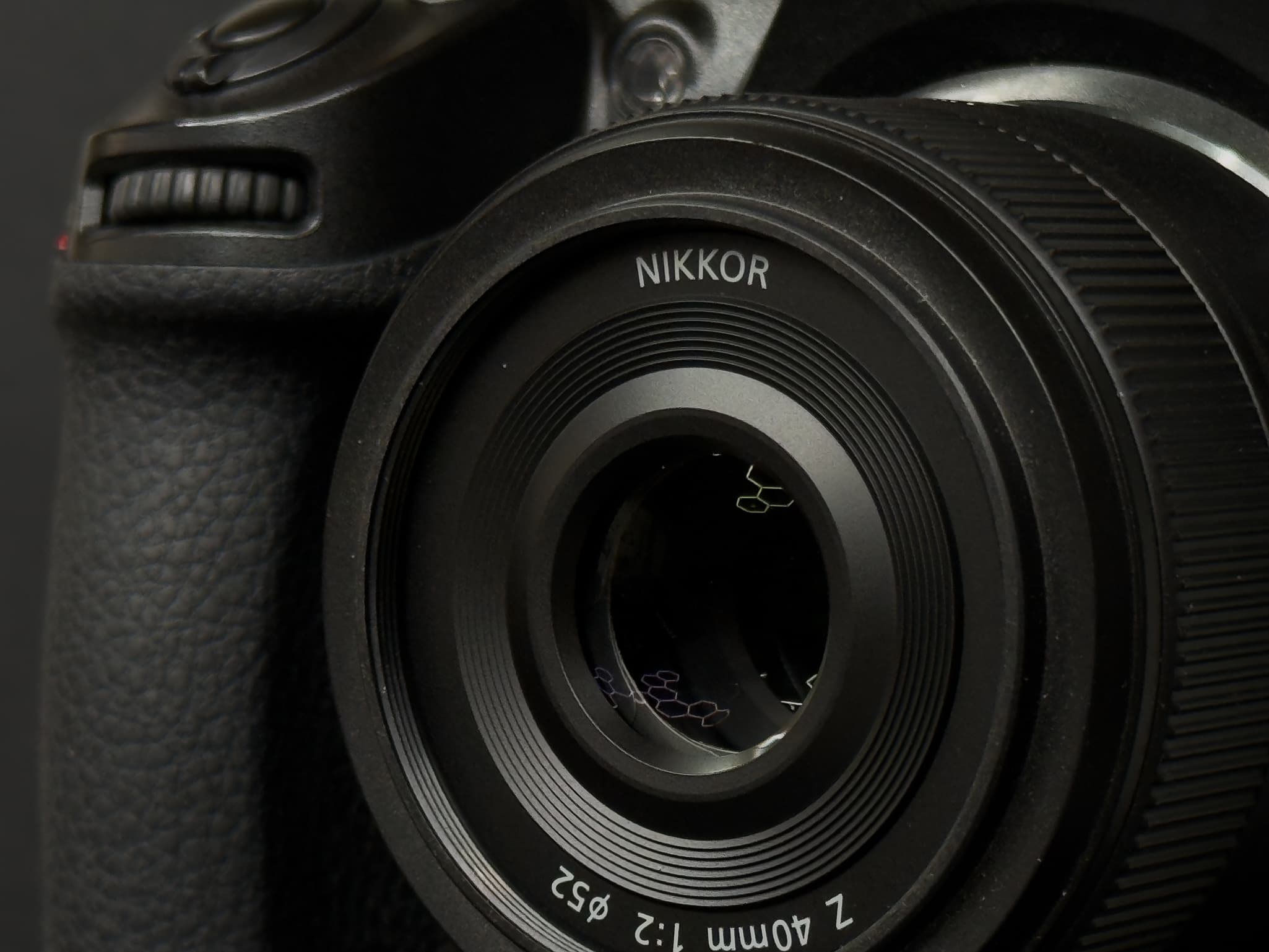
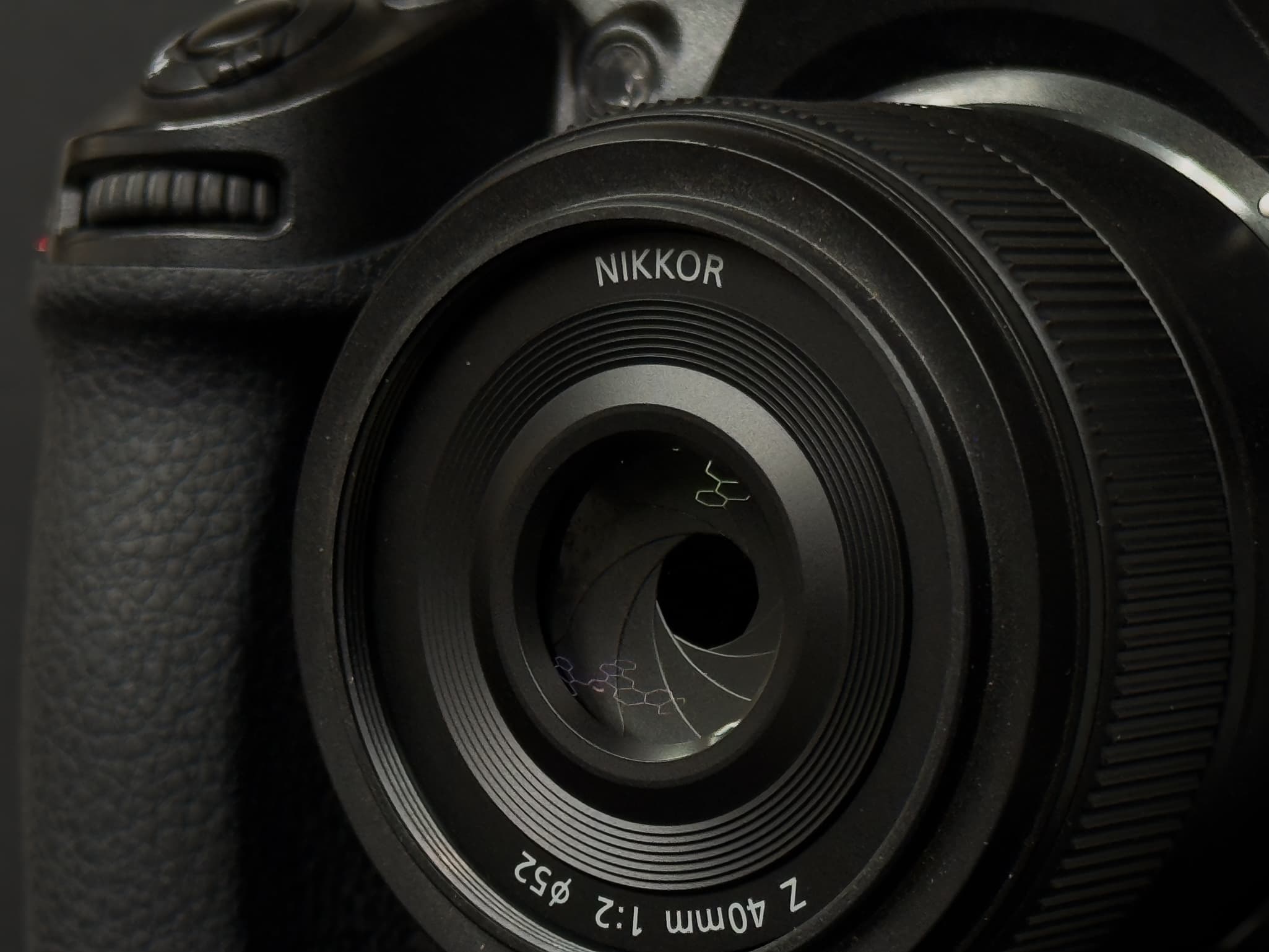
Head on look into the front element at f/16
1/4Focus Mechanism
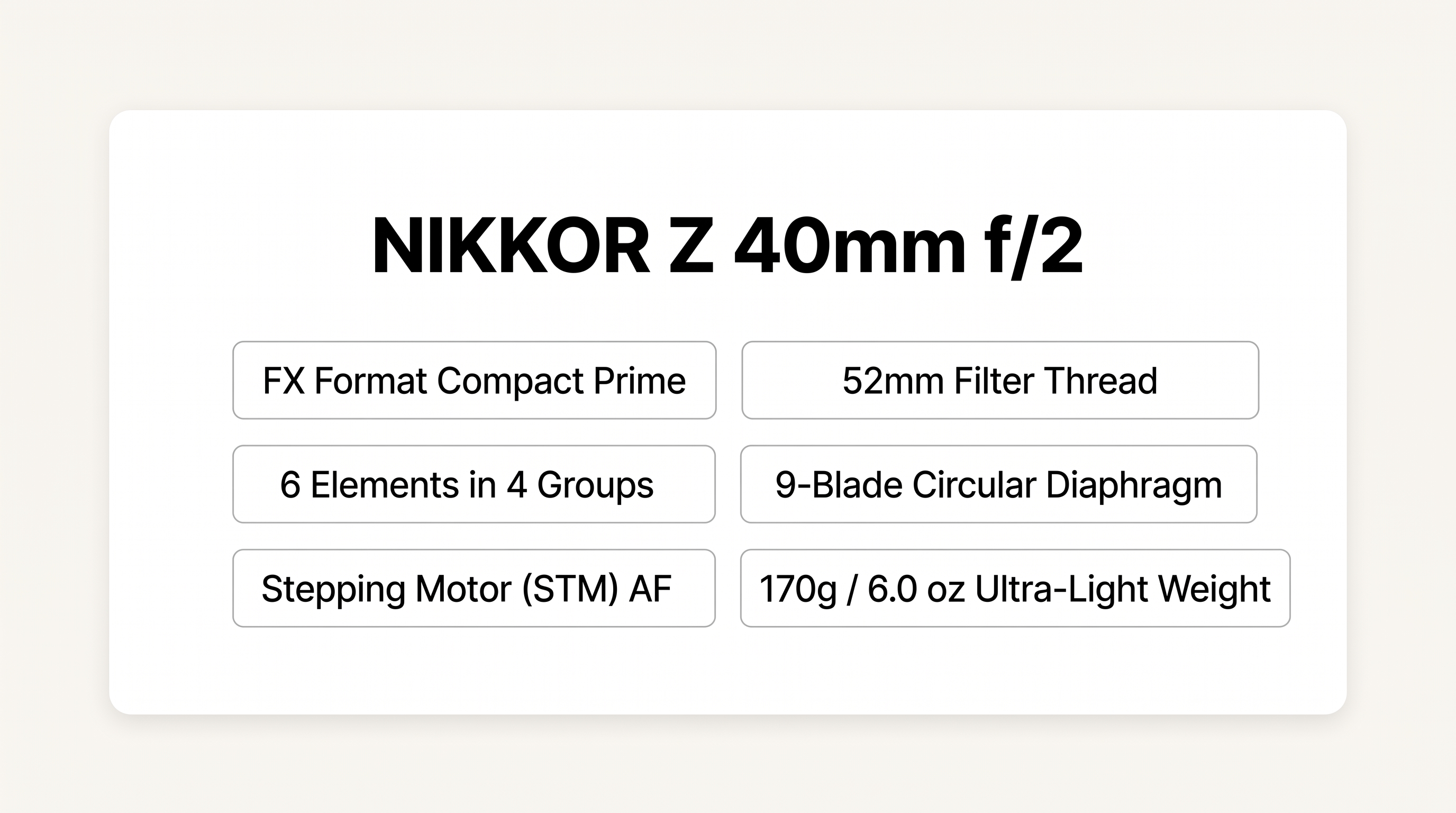
Focusing is handled internally via an integrated Stepping Motor (STM) actuator mechanism.
The lens utilizes an inner-focusing design; the front element and filter thread remain completely stationary during focusing operations, preserving physical balance and structural integrity against dust intrusion.
Driven by the camera body's phase-detection and contrast-detection AF systems, the STM motor translates signal input into fast, near-silent linear movement of the lightweight internal lens group.
- AF Speed: Acquisition from infinity to minimum focus distance occurs in approximately 0.15 to 0.25 seconds on mid-tier bodies like the Nikon Z6 II or Z8.
- Tracking Accuracy: The low mass of the internal focusing group allows high-frequency micro-adjustments, keeping pace with Nikon's 3D Tracking, Eye-Detection, and Subject-Detection algorithms.
- Noise Level: The motor operates near silently, making it a great choice during video recording in ambient environments.
| Parameter | Specification |
|---|---|
| Minimum Focus Distance (MFD) | 0.29 meters (0.96 feet / 11.4 inches) |
| Maximum Magnification | 0.17x (1:5.9 reproduction ratio) |
| Focus System | Internal Focus (IF) driven by Stepping Motor (STM) |
| Manual Focus Mechanism | Focus-by-wire via electronic control ring |
| Focus Throw (Linear Option) | Configurable on supported bodies (90° to 720° or speed-sensitive non-linear) |
Optical engineers incorporated focus breathing suppression directly into the optical configuration. When racking focus from minimum object distance (MOD) to infinity, the angle of view shifts negligibly (less than 2.5% scale shift).
This makes the lens suitable for precise video focus pulls and multi-shot focus stacking procedures in post-production.
Camera rapidly shifting autofocus points and quiet stepping motor
1/6Optical Design
The optical layout of the Nikon Z 40mm f/2 consists of 6 elements arranged in 4 groups. This basic formula keeps the lens lightweight while maintaining high transmission efficiency and light throughput.
- Aspherical Elements (2): Two double-sided aspherical elements are strategically placed within the middle and rear optical groups. These elements reduce spherical aberrations, field curvature, and sagittal coma glare, which are common issues in fast wide-to-normal prime lenses.
- Nikon Super Integrated Coating (SIC): Applied to individual lens surfaces to minimize intra-element reflections, internal light bouncing, and cross-ghosting.
- Omissions: The lens does not feature Nano Crystal Coat, ARNEO Coat, or Meso Amorphous Coat. As a result, direct bright light sources entering the lens at steep angles can produce moderate flare artifacts and localized contrast degradation.
- Lateral CA: Exceptionally low; corrected effectively in-camera and via embedded RAW profiles.
- Longitudinal CA (LoCA/Spherochromatism): Visible at f/2 as minor magenta fringing in front of the plane of focus and green fringing behind high-contrast edges. Stopping down to f/2.8 mitigates LoCA substantially; by f/4, it is eliminated.
- Distortion: Native optical layout exhibits moderate barrel distortion (~1.8%). Nikon utilizes forced embedded lens profile corrections within the camera's EXIF pipeline (applied directly to JPEGs and automatically mapped in software such as Adobe Lightroom and Capture One). Uncorrected RAW files show mild outward bowing, which is corrected digitally without resolution loss in the image circle center.
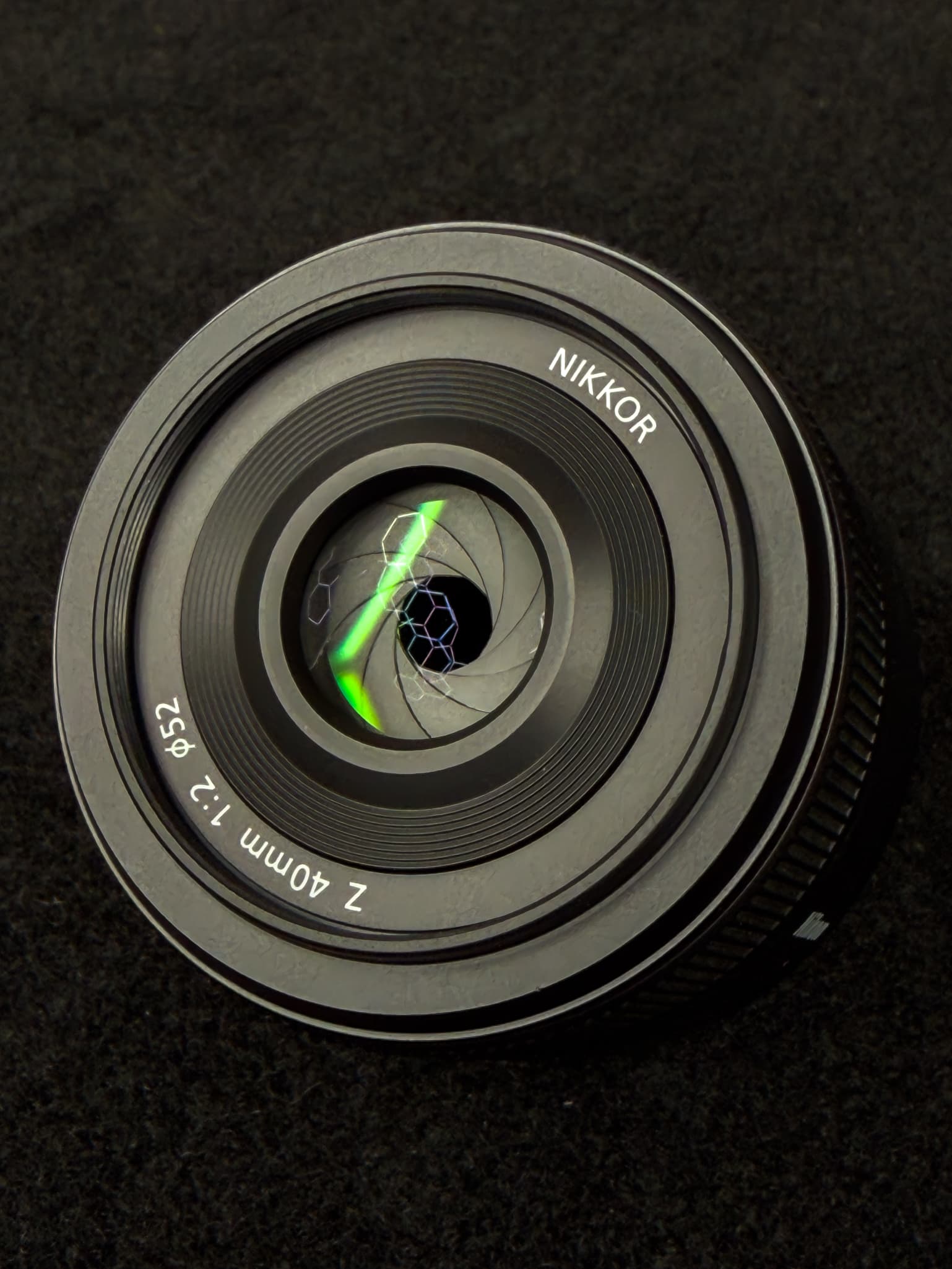
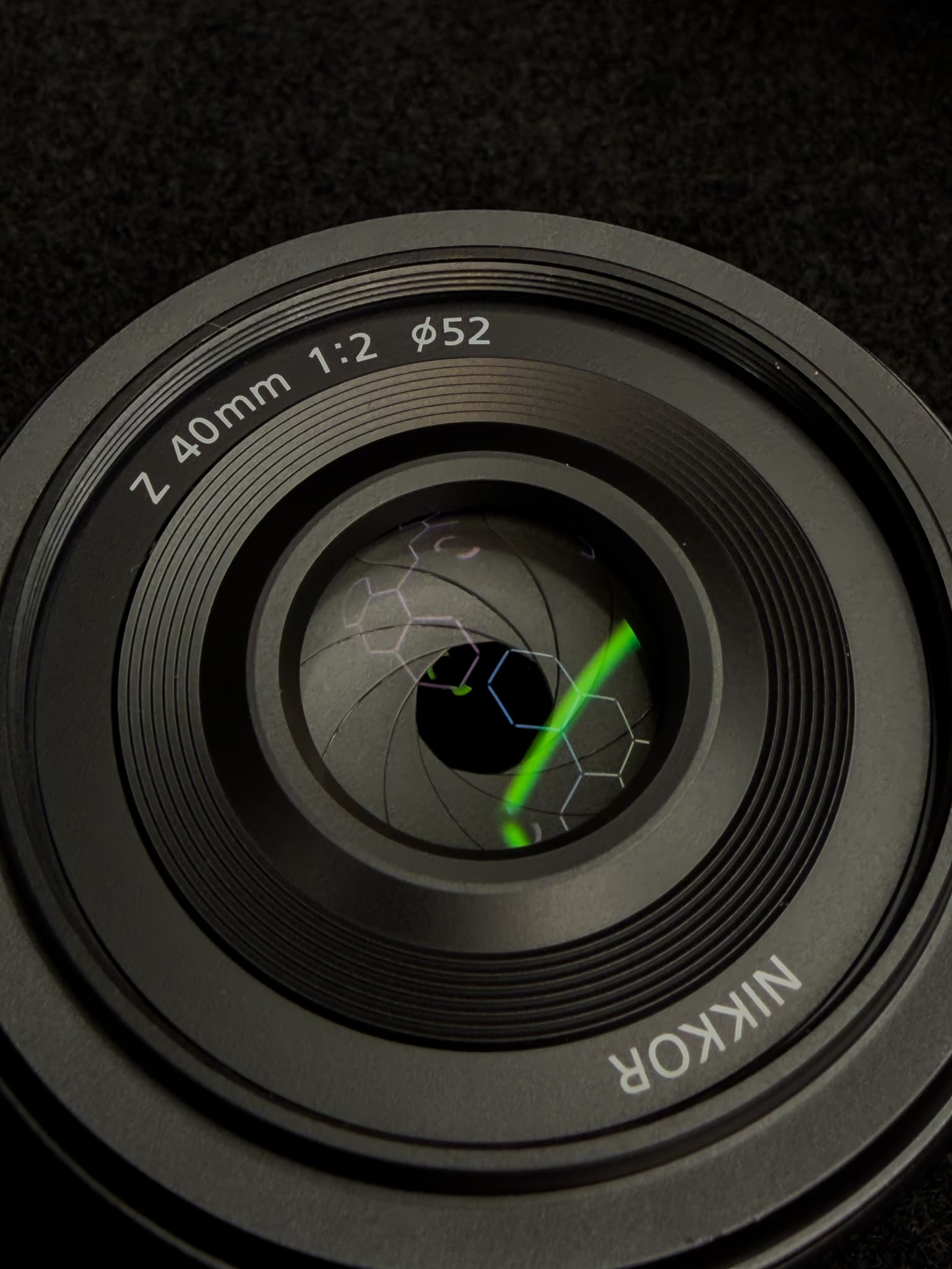
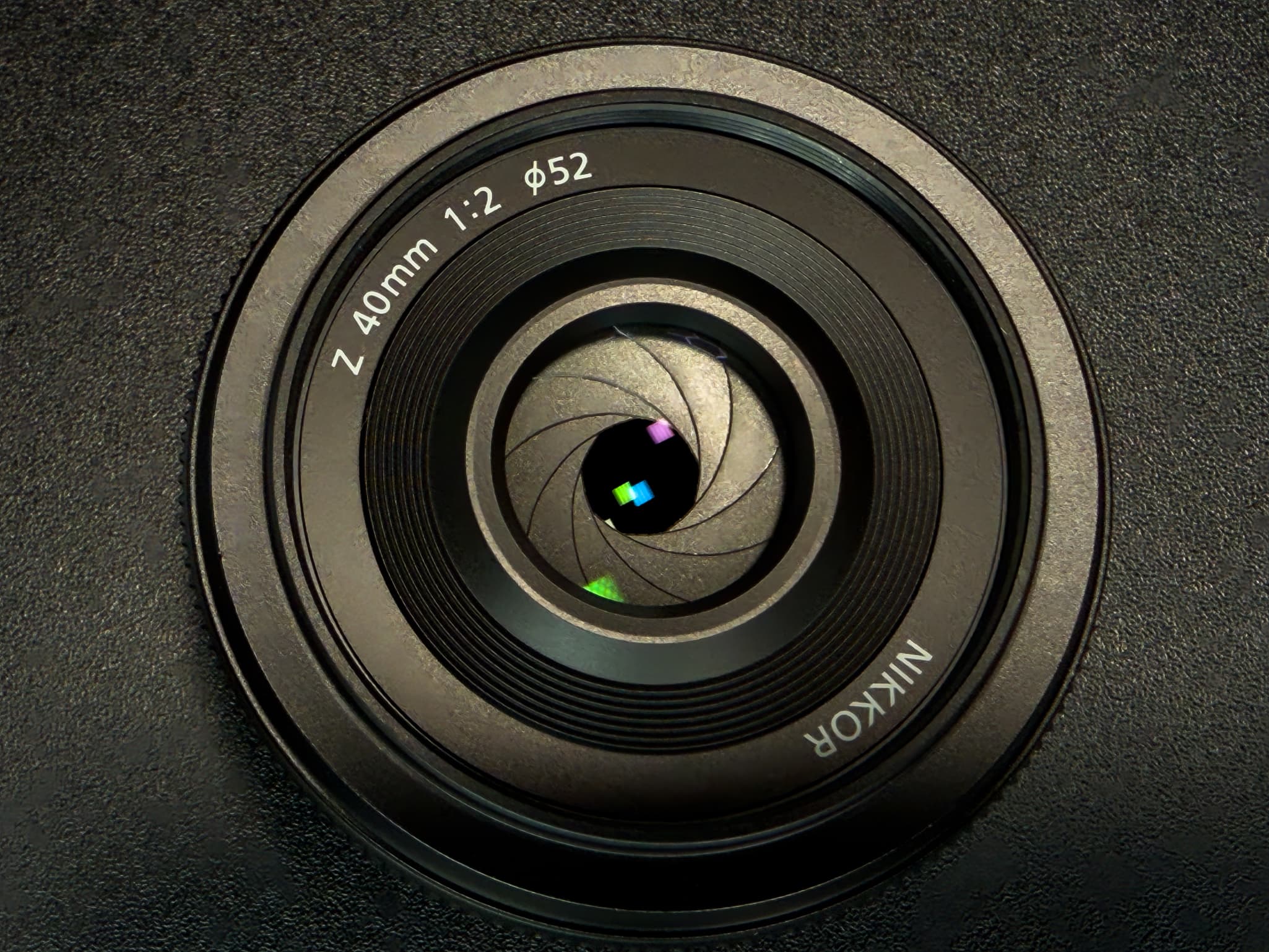
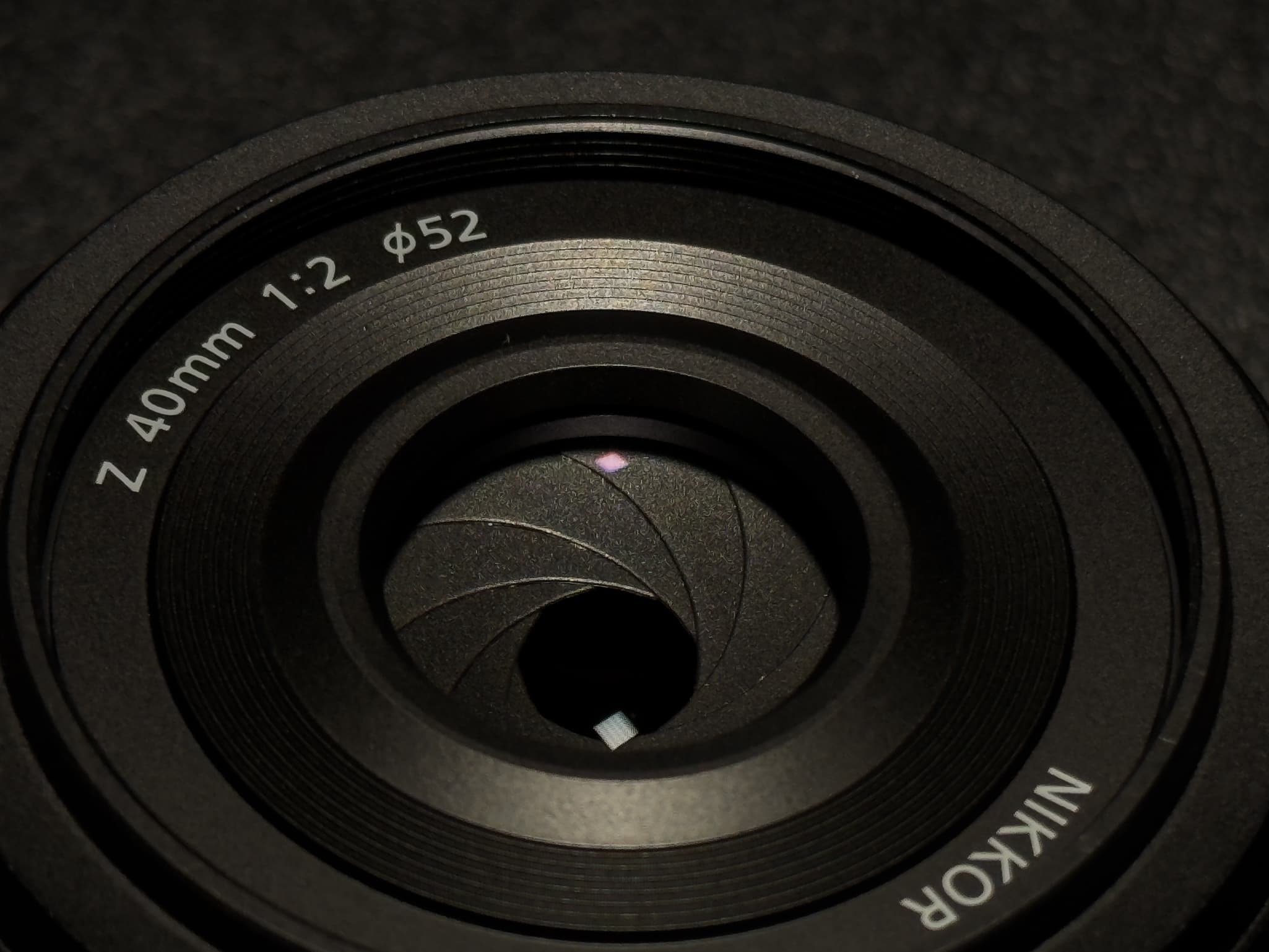




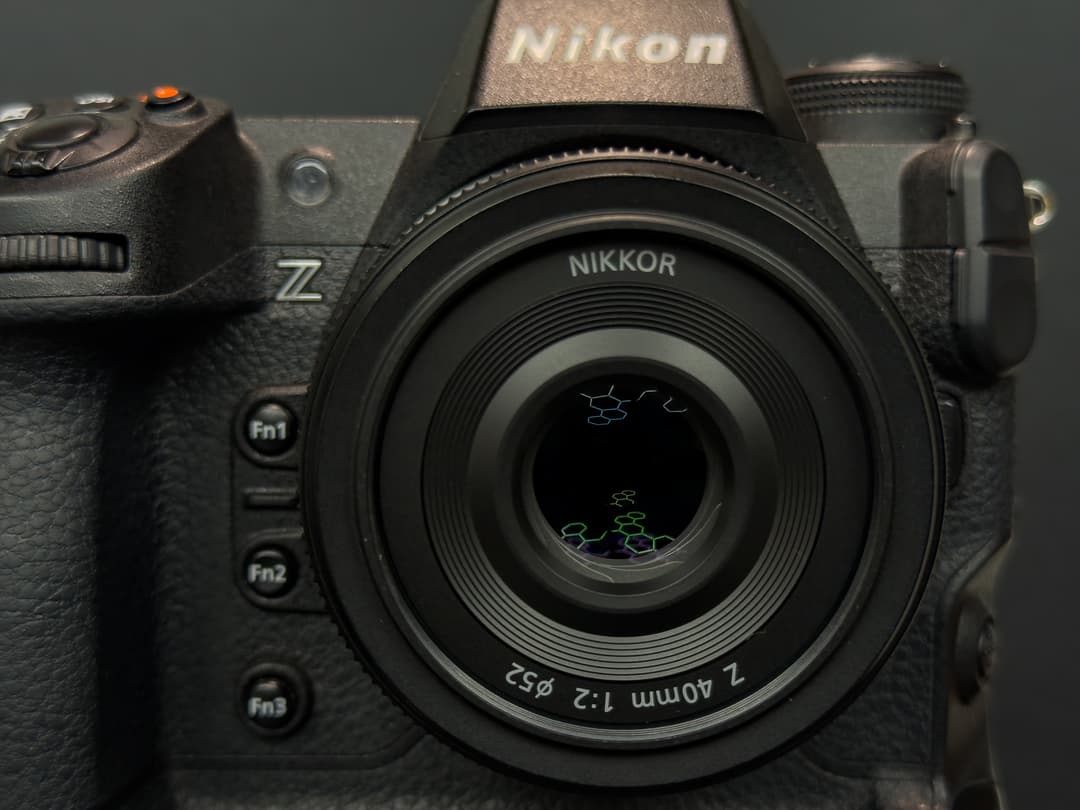
Front glass element of the Nikon Z 40mm f/2
1/8Construction Materials
To achieve its lightweight design and budget price point, Nikon used engineering polycarbonates throughout the lens exterior construction.
- Outer Barrel: High-density polycarbonate finished with a fine matte texture that complements the aesthetic of modern Nikon Z camera bodies.
- Control Ring: A wide, ribbed plastic ring positioned on the forward-to-mid section of the barrel. It operates electronically (focus-by-wire) with smooth rotation. Through the camera setup menu, this ring can be mapped to control: Manual Focus (MF), Aperture Control (Stepless), ISO Sensitivity, Exposure Compensation.
- Physical Switches: The barrel omits physical switches. There is no manual AF/MF switch or L-Fn button. All focus mode toggles must be performed through the camera interface or mapped custom buttons on the camera body.
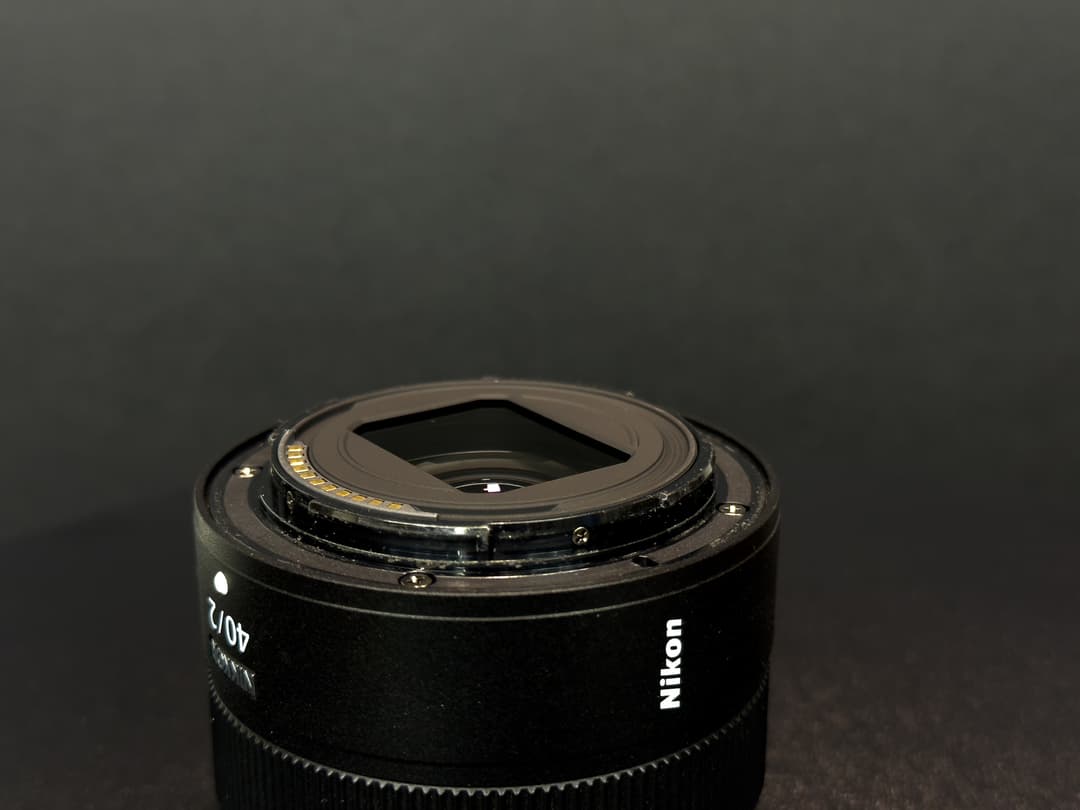
- Lens Mount: Features a reinforced composite polymer (plastic) bayonet mount instead of a traditional brass plate. While lighter, plastic mounts can show wear under frequent, high-force lens changes, though this lightweight optic exerts minimal stress on the interface.
- Filter Thread Size: Accepts standard 52mm screw-in filters. The non-rotating front filter assembly allows for straightforward operation of circular polarizers (CPL) and variable neutral density (VND) filters.
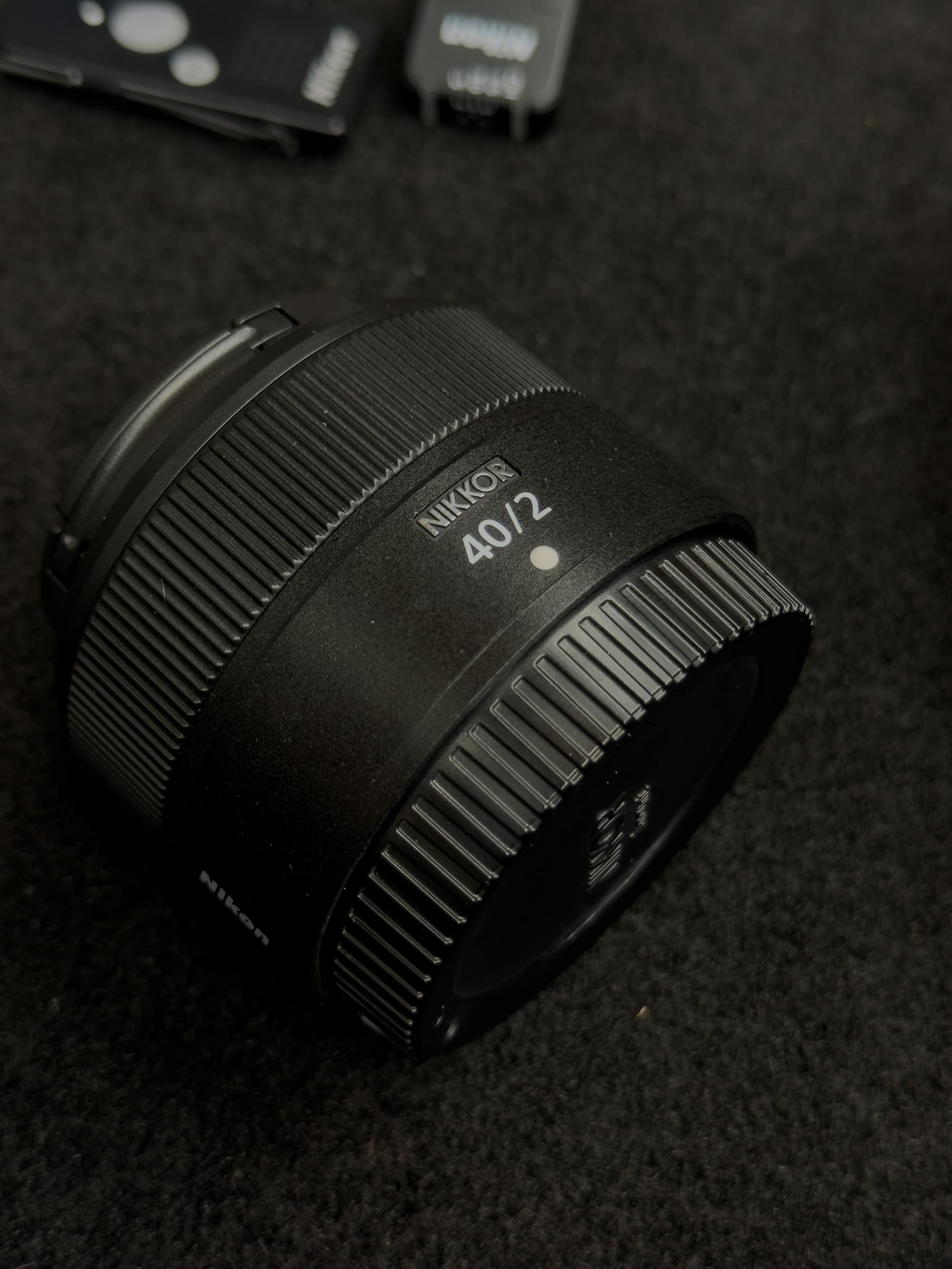
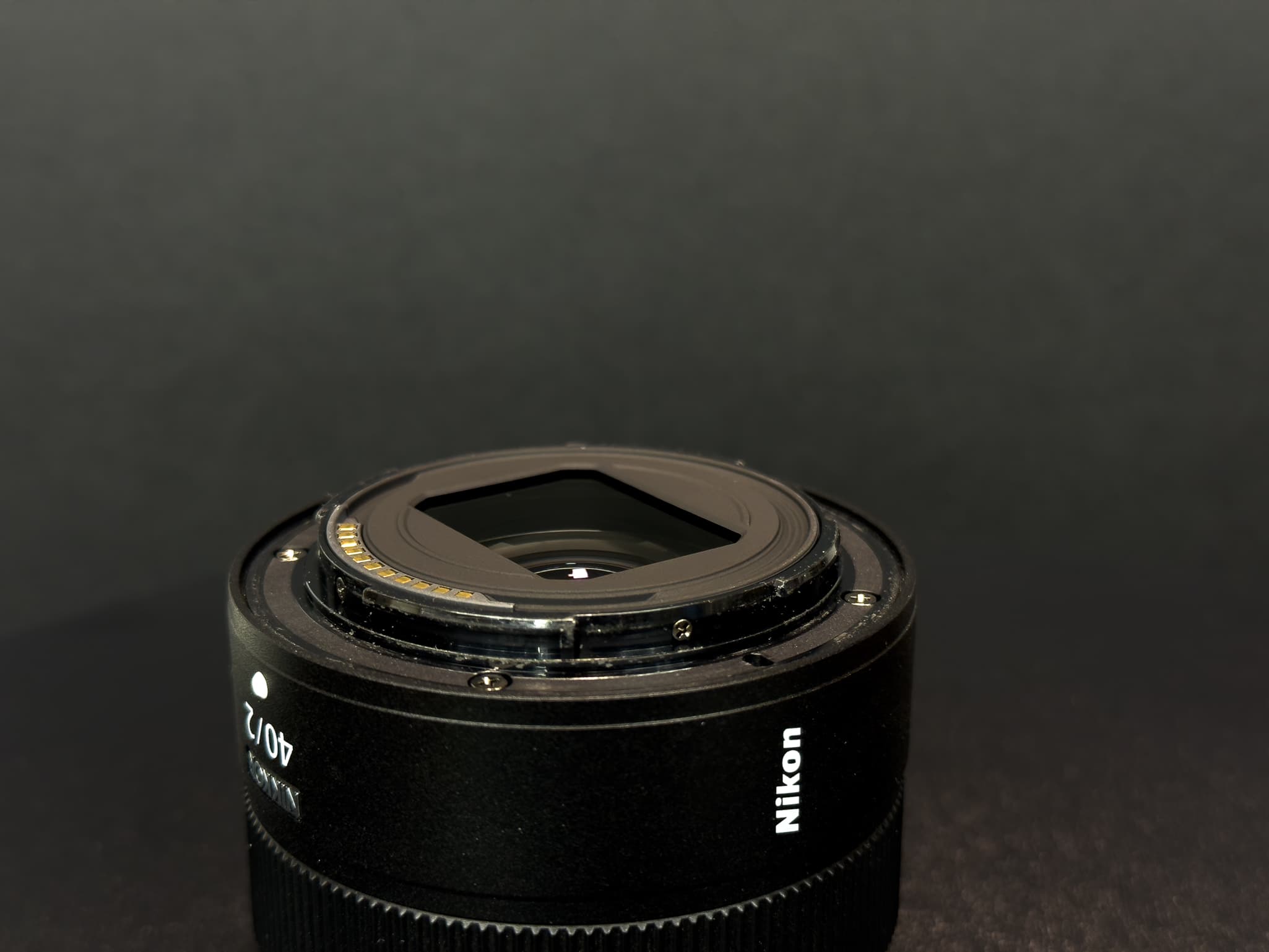
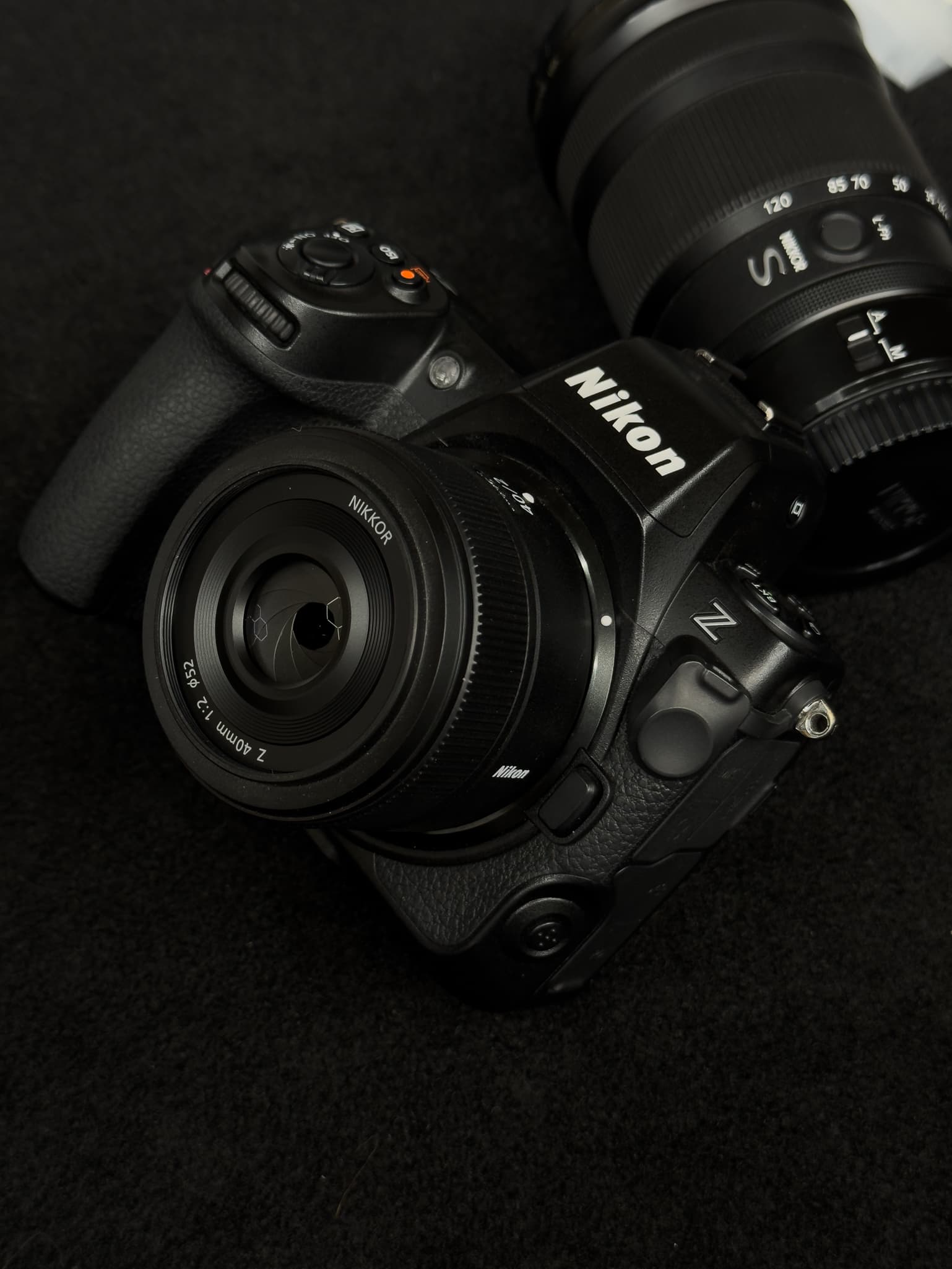
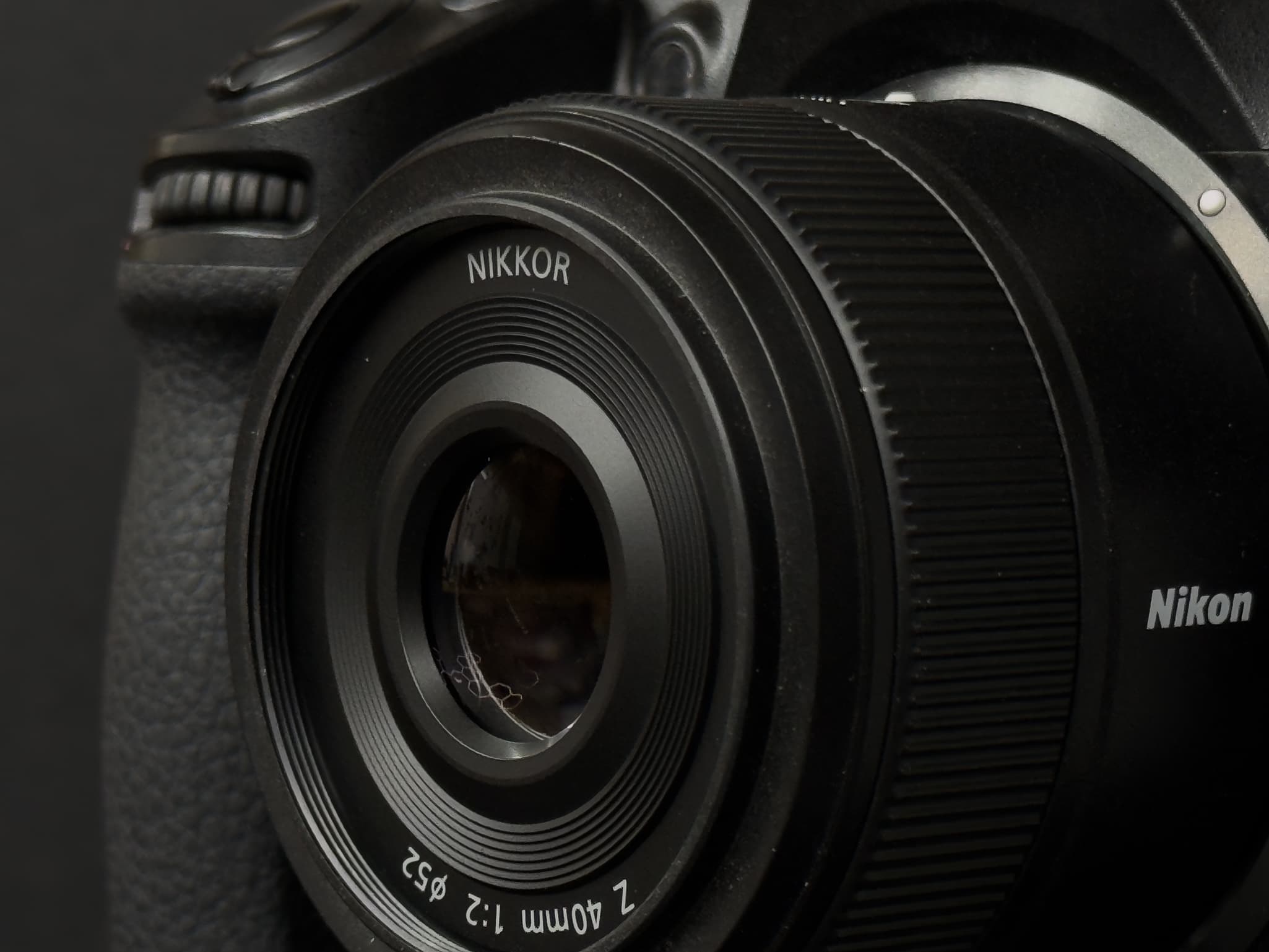

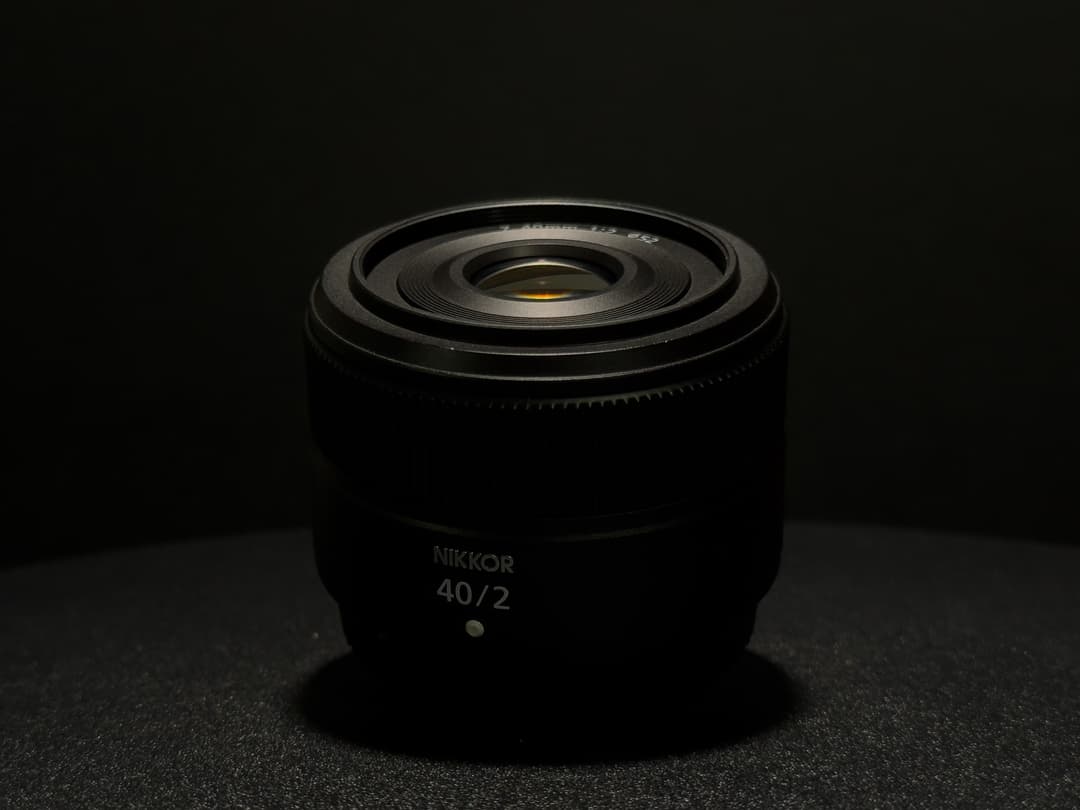
Highlighting lightweight, all-polycarbonate plastic construction of the Nikon Z 40mm f/2
1/6Weather-Sealing
Despite its entry-level positioning, the Nikon Z 40mm f/2 includes basic environmental protections:
- Internal Sealing: Internal rubber seals are placed at rotational and joint junctions along the outer ring housing to block environmental debris.
- Front Element Protection: The front element lacks a protective Fluorine coating. Consequently, water, oil, and fingerprints adhere more easily to the front element than on higher-end S-Line optics. A high-quality 52mm protective UV filter or explicit cleaning routines are recommended when operating in severe environmental conditions (ex., blowing sand or salt water spray).
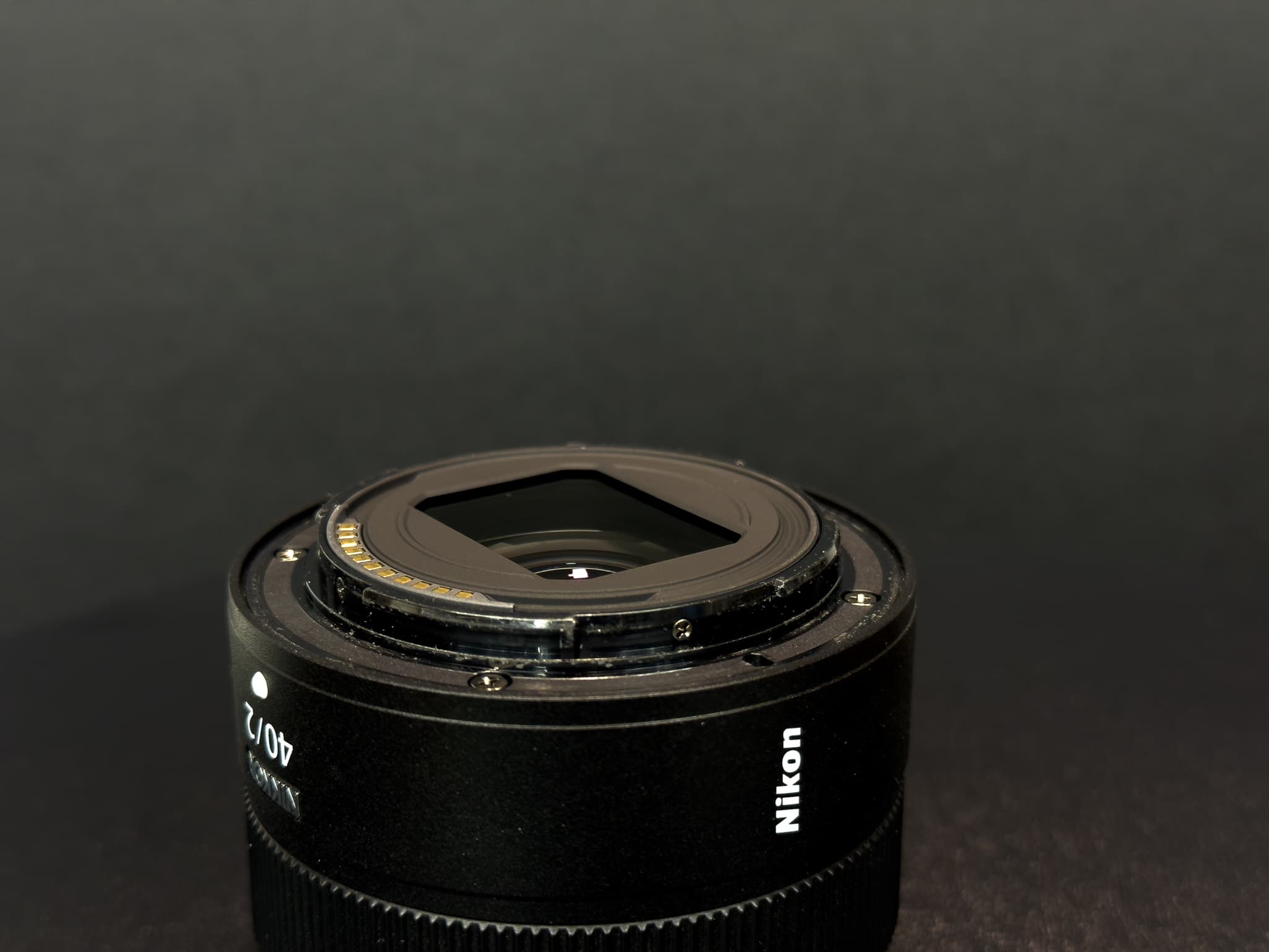
Lack of rubber gasket shroud on the Nikon Z 40mm f/2 for weather-sealing
Weight
The physical footprint of the Nikon Z 40mm f/2 approaches classic pancake lens dimensions, though its barrel length classifies it technically as an ultra-compact prime.
| Specification | Metric Units | Imperial Units |
|---|---|---|
| Weight | 170 grams | 6.0 ounces |
| Length (from mount flange) | 45.5 millimeters | 1.8 inches |
| Maximum Diameter | 70 millimeters | 2.8 inches |
- FX Camera Bodies (Z5, Z6 III, Z7 II, Z8): The 170-gram weight shifts the system’s center of mass back to the camera grip. When mounted on a Z8 or Z6 series body, the camera setup feels remarkably light, ideal for single-handed operation over extended periods.
- DX Camera Bodies (Z50, Z30, Z fc): On smaller bodies, the compact lens proportions match the camera chassis, creating an unobtrusive, street-ready kit.
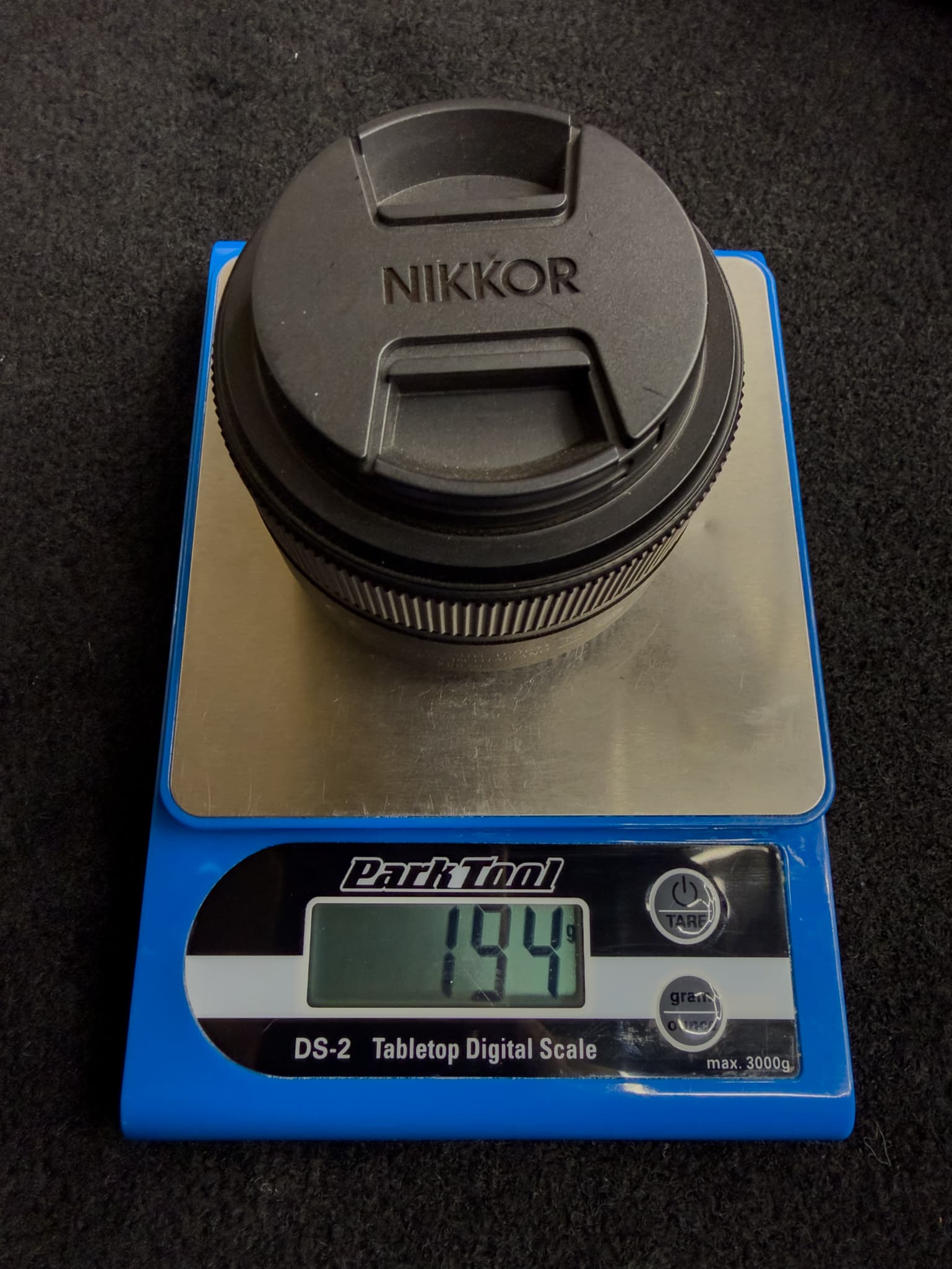
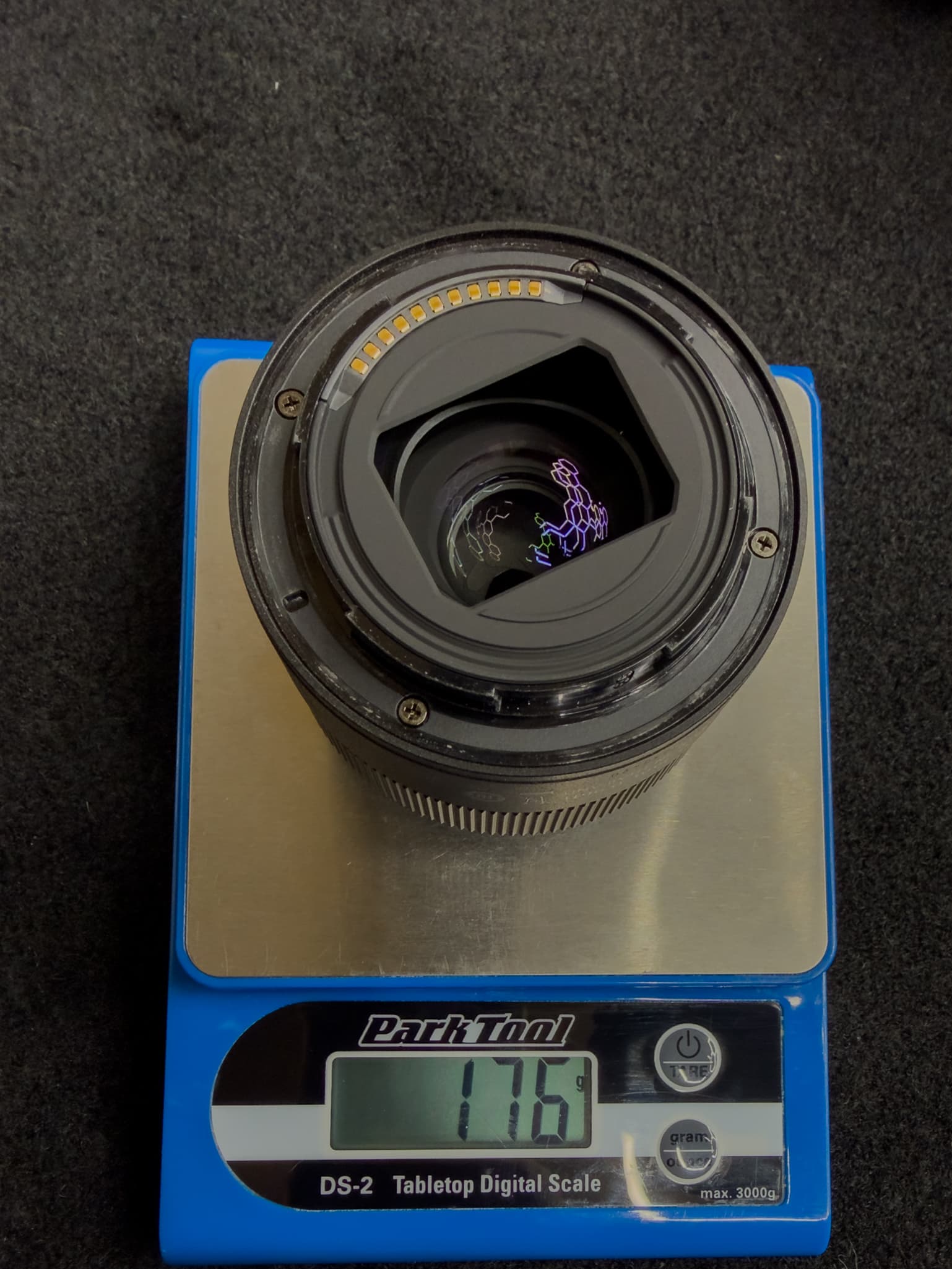
Weight of Nikon Z 40mm f/2 with lens cap
1/2Image Stabilization
The NIKKOR Z 40mm f/2 contains no internal optical Vibration Reduction (VR) mechanism.
- Full-Frame Bodies with IBIS: When mounted to IBIS-equipped bodies, the camera detects the focal length (40mm) automatically and applies 5-axis sensor stabilization. This combination enables sharp handheld exposures at shutter speeds as low as 1/2 second to 1/4 second.
- APS-C/DX Bodies without IBIS: On bodies lacking IBIS (such as the Z50 or Z30), stabilization relies entirely on maintaining proper shutter speeds. Based on the 1/focal length rule for the 60mm equivalent field of view, maintaining a shutter speed of 1/80s or faster prevents motion blur from camera shake. The wide f/2 maximum aperture helps preserve these shutter speeds in low ambient light without over-elevating ISO settings.
Image Quality
For portrait photography, at f/2, central optical sharpness renders fine hair and facial features clearly, while lower contrast on frame edges helps soften skin tones slightly. The 40mm focal length allows for environmental portraits, capturing the subject along with their surroundings. Background rendering is pleasant, although distant pin-point background lighting exhibits optical vignetting (cat-eye deformation) toward the image edges.
For street photography, the lens excels in street photography applications. Its small form factor makes it unobtrusive in public spaces. Focusing speed allows quick candid captures, and the 57-degree diagonal field of view provides space to frame human subjects alongside urban architecture.









Street photography with the Nikon Z 40mm f/2
1/9For low light photography, the fast f/2 aperture gathers substantial light, keeping ISO settings lower in dim environments. When combined with full-frame IBIS, night street scenes can be shot handheld at low ISO settings. However, sagittal coma glare is visible around point light sources in the extreme corners at f/2; stopping down to f/2.8 drastically reduces coma distortion.



Low light photography with the Nikon Z 40mm f/2
1/3For product photography, with a 0.29m minimum focus distance, the lens works well for medium product framing, food photography, and flat lays. At f/2, the shallow depth of field causes rapid focus falloff; stopping down to f/5.6 or f/8 provides edge-to-edge sharpness across flat subject planes.
For landscape photography, when stopped down to f/5.6 - f/8, the lens delivers balanced edge-to-edge sharpness and high micro-contrast. Field curvature is low when stopped down, making it an effective choice for lightweight backcountry travel landscapes.

Landscape photography with the Nikon Z 40mm f/2
For macro photography, the lens is limited to a 0.17x maximum magnification ratio (1:5.9 reproduction), meaning it cannot function as a dedicated macro lens. It is best suited for general close-up detail shots, such as flowers or larger tabletop objects, rather than fine macro work.



Macro photography with the Nikon Z 40mm f/2
1/3F-Stop Ranges
At f/2.0, the center delivers good sharpness and resolving power, though spherical aberration slightly reduces micro-contrast. The corners are noticeably soft with reduced contrast and resolution, accompanied by severe uncorrected peripheral light falloff of approximately -2.2 EV and minor longitudinal chromatic aberration visible around high-contrast edge transitions.
Stopping down to f/2.8, central resolution improves significantly alongside a boost in contrast. While corner sharpness begins to recover, the edges remain visibly softer than the center, though vignetting decreases noticeably to roughly -1.2 EV.
By f/4.0, central performance enters the excellent tier, rendering fine textures with crisp detail. Corner sharpness improves significantly enough to make landscape photography viable, and light falloff drops to a negligible -0.5 EV.
At f/5.6, the lens achieves peak optical sharpness across the overall frame. Frame corners reach excellent resolution levels that closely match the center, while astigmatism and coma are fully suppressed.
At f/8.0, central sharpness matches the high benchmark set at f/5.6, while the corners reach their absolute peak resolving power. This edge-to-edge consistency makes it the optimal aperture for critical landscape and architectural work.
By f/11.0, diffraction begins to subtly soften micro-details across the sensor plane. Overall resolution nevertheless remains sufficiently high for practical outdoor shooting when extended depth of field is required.
At f/16.0, diffraction noticeably limits resolution across the entire frame, causing an obvious softening of both contrast and fine detail. Consequently, this setting is best reserved strictly for scenarios where maximum depth of field is unavoidable.





Nikon Z 40mm f/2 at f/2
1/5Video Quality
The Nikon Z 40mm f/2 includes features that make it a useful tool for video production on Z-mount cameras.
- Focus Breathing: Optically and electronically suppressed, ensuring stable framing during focus racks between foreground and background subjects.
- Aperture Transitions: When mapped to the electronic control ring, adjustments to the aperture occur smoothly and silently without steps or audible clicks recorded on internal audio.
- Autofocus Servo Tracking: The STM motor tracks subjects smoothly in AF-C mode, keeping pace with eye-tracking algorithms without hunting or sudden jerks.
Weighing 170g and measuring 45.5mm in length, the lens places minimal torque on motorized camera gimbals (such as the DJI RS 3 / RS 4 series). Re-balancing the gimbal after focus adjustments is unnecessary because the inner focus mechanism maintains a constant center of gravity.
Conclusion
The Nikon Z 40mm f/2 is an exceptionally versatile optic within the Nikon Z lineup. By balancing compact dimensions, an affordable price tag, an f/2 aperture, and sharp stopped-down performance, Nikon has created an appealing everyday lens option for both full-frame and APS-C formats. While it exhibits wide-open corner softness, minor vignetting, and a plastic lens mount, these compromises are balanced by its light weight, fast autofocus, and center sharpness.
Buy it if:
- You want a compact, featherweight 'everyday carry' prime lens that minimizes total kit weight.
- You enjoy the 40mm focal length perspective for street, travel, and candid photography.
- You want an affordable f/2 aperture lens that performs well in low-light environments.
- You are looking for a light, low-torque setup for gimbal or handheld video work.
- You shoot on an APS-C (DX) body like the Z50, Z30, or Z fc and want a lightweight 60mm equivalent portrait prime.
Skip it if:
- You demand edge-to-edge optical sharpness and high micro-contrast wide open at f/2.
- You require a durable metal lens mount and full pro-tier weather sealing.
- You need physical barrel controls, such as a dedicated AF/MF switch or custom L-Fn buttons.
- You shoot backlit subjects frequently and require specialized anti-reflective coatings (like Nano Crystal or ARNEO) to prevent ghosting and flare.
- You already own high-performance prime lenses like the Nikon Z 35mm f/1.8 S or Nikon Z 50mm f/1.8 S and are unwilling to sacrifice optical quality for size savings.
Description
The Nikon Z 40mm F2 is a compact, fast prime lens designed for Nikon Z-series mirrorless cameras, offering a perfect blend of portability, performance, and image quality. With its bright f/2 aperture, this lens excels in low-light conditions, providing sharp, high-contrast images with beautiful subject isolation and a smooth, creamy bokeh. The 40mm focal length offers a natural perspective, making it a versatile choice for street photography, portraits, and general-purpose shooting. Its small size and lightweight design make it ideal for photographers who want a discreet, everyday lens that doesn’t compromise on quality. The lens features advanced optical elements that minimize distortion and chromatic aberration, delivering clear, vibrant images with excellent color accuracy. Whether you're capturing dynamic street scenes, intimate portraits, or everyday moments, the Nikon Nikkor Z 40mm F2 provides exceptional image quality and creative control, making it a perfect addition to any photographer’s kit.
Sample Photos
Sample photos will be added soon!
Basics
| Name | Nikon Z 40mm F2 |
|---|---|
| Release Date | September 2021 |
| Brand | Nikon |
| Type |
|
| Focal Length | 40mm |
| Prime or Zoom | Prime |
| Max Format Size | 35mm FF |
| Diaphragm Blades | 9 |
| Lens Elements | 6 |
| Lens Groups | 4 |
| Filter Thread | 52mm |
| Lens Hood Supplied | |
| Tripod Collar | |
| Lens Coating | |
| Weather-Sealing | Yes |
| Color | Black |
| Lens Mount |
|
Autofocus
| Autofocus | Yes |
|---|---|
| Motor Type | Stepper motor |
| Focus Method | Internal |
| Minimum Focus | 0.29 m (11.42″) |
| Max Magnification | 0.17× |
Aperture
| Maximum Aperture | f2 |
|---|---|
| Minimum Aperture | f16 |
| Aperture Ring |
Features
| Features |
|
|---|
Dimensions & Weight
| Weight | 170 g (0.37 lb) |
|---|---|
| Diameter | 70 mm (2.76″) |
| Length | 46 mm (1.81″) |
Use Case
| Use Cases |
|
|---|
Experience Level
| Experience Level | Beginner, Amateur |
|---|
* Product prices and availability are accurate as of the date/time indicated and are subject to change. Any price and availability information displayed on Amazon.com at the time of purchase will apply to the purchase of this product. Imaginated.com may receive compensation for purchases made at participating retailers linked on this site. This compensation does not affect what products or prices are displayed, or the order of prices listed. Learn more here.